
Last updated November 25, 2026
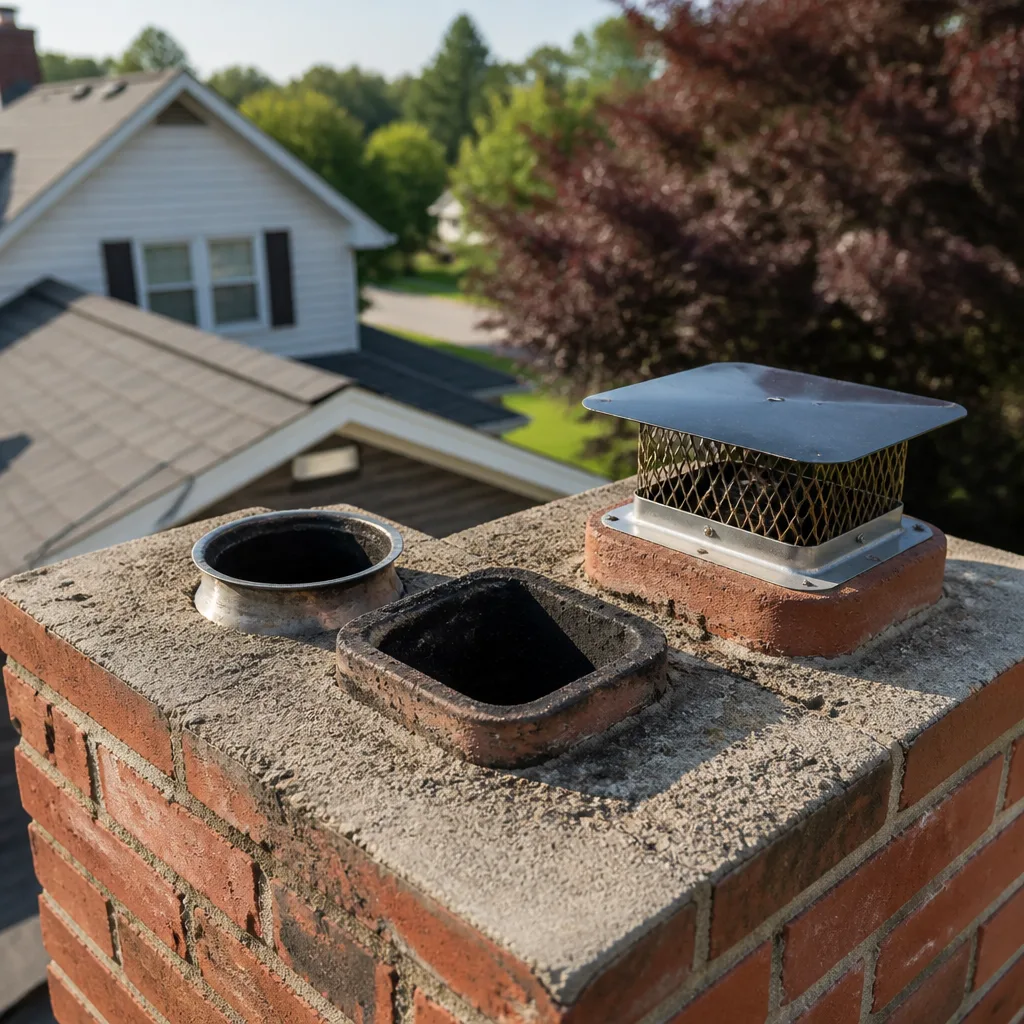 Sweep & inspection
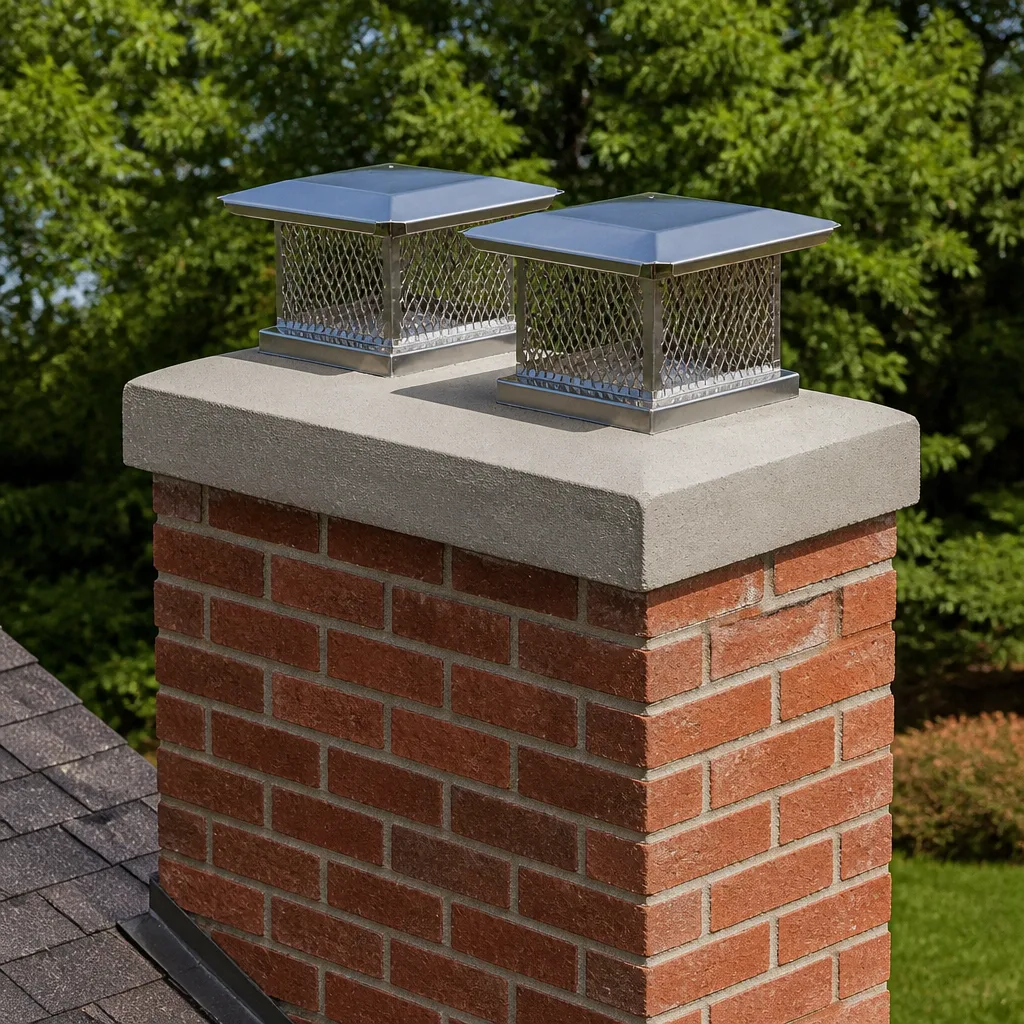 Caps & crowns
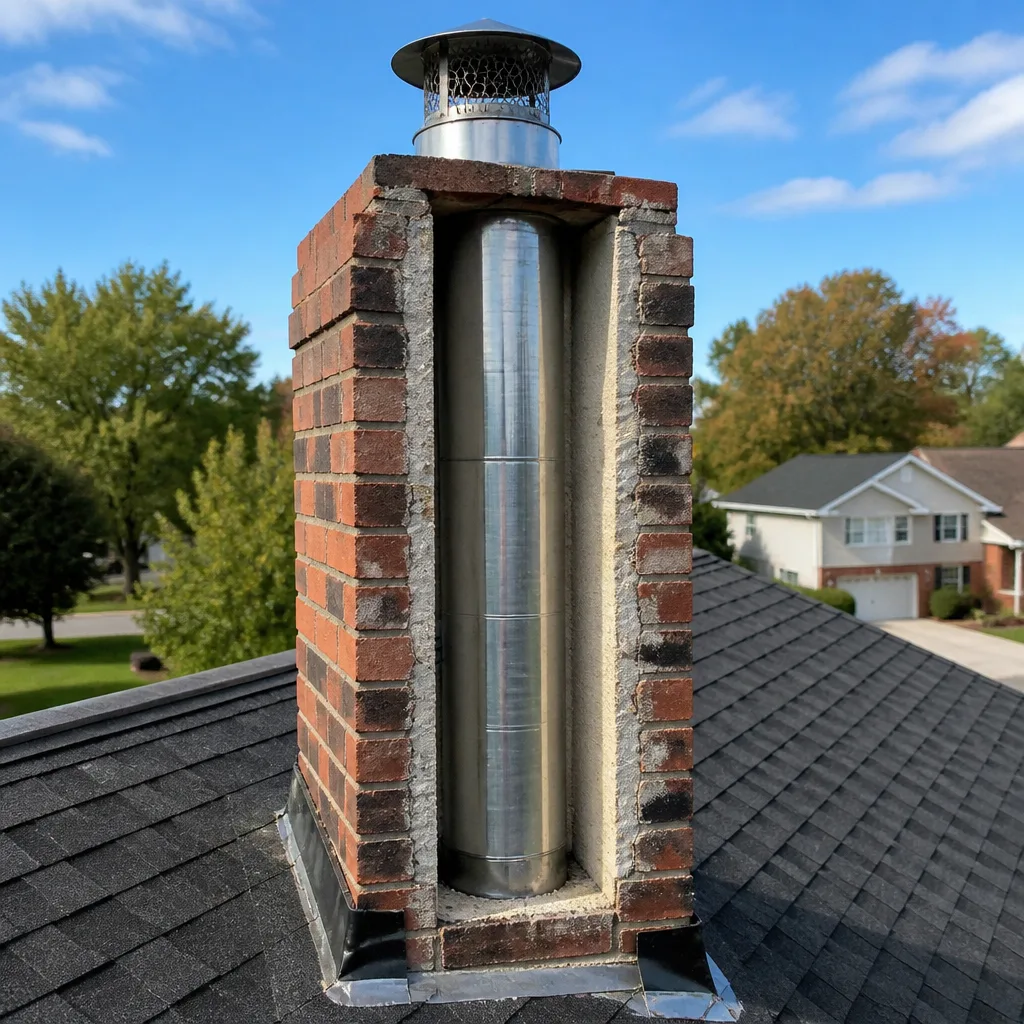 Flue relining
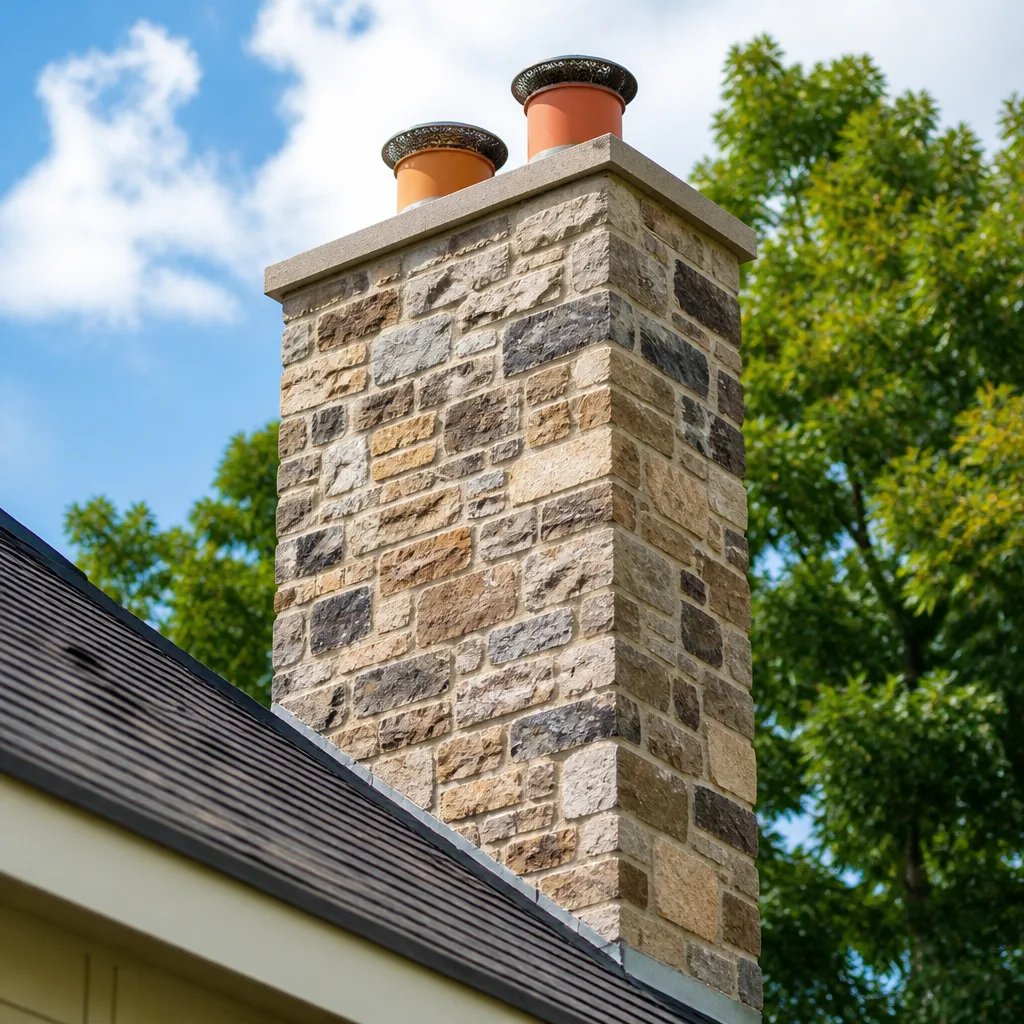 Masonry repair
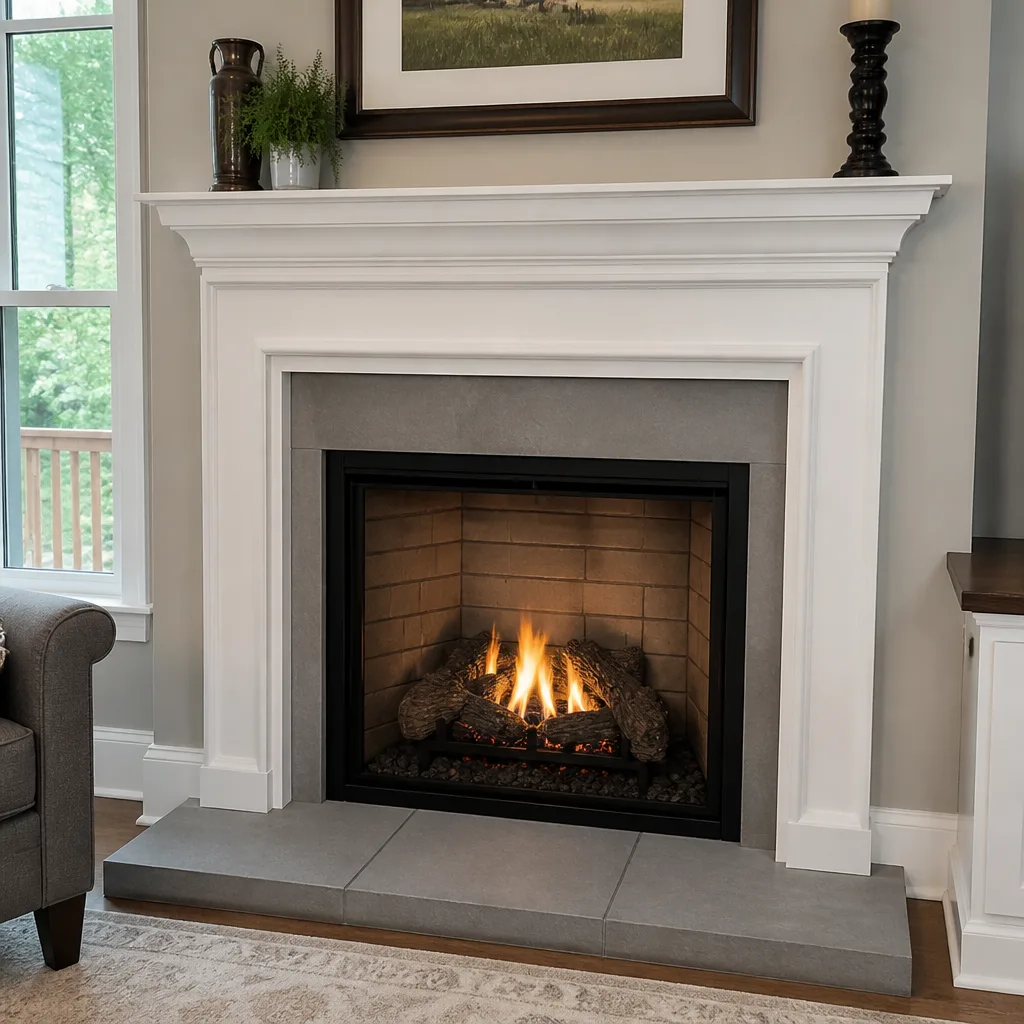 Gas fireplace service
Level 1 sweep and inspection to the NFPA 211 annual standard - flue, crown, cap, and flashing checked and photographed
Chimney sweep logs do not sweep chimneys. They loosen some creosote - which then falls where a brush and vacuum still have to collect it.
Choosing the Right Chimney Cleaning Brand: A Buyer’s Guide for South Hill
Two crowns get sealed on the same afternoon. One is skimmed with a mason’s trowel mix, the other coated with a purpose-made crown coating. The day the job wraps, they look identical. Two winters of South Hill rain and a hard freeze later, one has hairline cracks running out to the edge and water is finding its way into the flue. The other is still holding. Nobody warns homeowners about that gap, because the conversation almost always centers on labor – who has the best brush, who charges the least. The material doing the actual protecting rarely comes up. This guide changes that. We’ll walk through which chimney products matter, what to ask before anyone touches your flue, and how to read a quote the way a tradesperson does. You’ll finish knowing how to judge a chimney cleaning company in South Hill by what’s holding up years down the road, not what’s shiny on the invoice.
Quick Answer
The right chimney cleaning brand is the one whose products are named in your written quote and carry a manufacturer warranty you can verify: professional-grade liner and coating systems from makers like HeatShield, Gelco, Olympia Chimney, and Famco, not consumer brush kits. Ask which specific product goes inside your flue, why that product, and what voids the warranty. A sweep is only as good as the material left behind. South Hill Chimney Sweep uses a curated roster of industry brands and writes the specification into the estimate before any work begins.
Styles & brands we work with
- Sweep & inspection
- Caps & crowns
- Flue relining
- Masonry repair
- Gas fireplace service
Table of Contents
- Why the Brand Behind the Brush Matters More Than You Think
- Consumer Brush Kits vs. Professional-Grade Equipment
- Products That Go Inside the Flue Where You Can’t Inspect
- Liner Systems, Manufacturer Warranties, and What Voids Them
- Crown Sealing and Waterproofing: Where Cheap Materials Fail First
- Questions to Ask a Contractor About Materials
- How to Read a Written Quote Like a Tradesperson
- How to Verify the Installer, Not Just the Product
Why the Brand Behind the Brush Matters More Than You Think
Most homeowners judge a chimney company by the person standing in the living room. That’s understandable, and it’s also the least reliable signal. The technician’s skill decides how well the job goes today. The material they choose decides how the system behaves for the next decade. A meticulous sweep paired with a cut-rate crown coating is a thorough cleaning followed by premature failure. A mediocre sweep with top-tier products is still a mediocre sweep. You want both, and the only way to confirm both is to talk about the products by name.
This matters more in South Hill than in a dry climate. Our wet winters and freeze-thaw cycles work masonry hard. Water gets into a hairline crack, expands overnight when temperatures drop, and widens the crack by morning. Repeat that across a few seasons and a small flaw becomes a structural problem. The material sealing the top of your chimney and lining the flue is the barrier between that cycle and your home’s interior. In our experience, the failures we’re called out to repair in South Hill are less about bad workmanship than about materials that were never rated for this climate in the first place.
There’s a second reason brands matter, and it’s about accountability. A named product from a recognized manufacturer comes with documentation, installation requirements, and a warranty. A generic “sealer” poured from an unmarked container comes with a verbal assurance and nothing else. When something goes wrong two winters later, one of those gives you recourse and the other doesn’t. That’s the real difference between a professional chimney brand and a hardware-store substitute.
Consumer Brush Kits vs. Professional-Grade Equipment: What the Difference Does to Cleaning Thoroughness
Walk into any home improvement store in South Hill and you can buy a chimney brush kit for less than the cost of dinner. It’ll have a plastic-bristled brush, a few flexible rods, and a handle. It will also do a fundamentally different job than the equipment a professional sweep brings through the door. This isn’t about gatekeeping; it’s about what creosote actually requires to remove safely and completely.
Here’s how professional-grade equipment differs from what you’ll find on a retail shelf:
- Brush material and construction. Professional brushes use specific wire gauges for specific flue types – poly for stainless liners so the metal isn’t scored, wire for clay tile where glaze and hard creosote demand more bite. Consumer kits are one-size, and the wrong bristle can scratch a liner or skip over glazed deposits entirely.
- Rod flexibility and control. Professional rods are engineered to follow the flue’s actual path without kinking or snapping. Cheap rods bend, and a bent rod can’t maintain contact with the flue walls, which means the brush skips sections.
- Rotation and power. A hand-pushed retail brush relies entirely on the operator’s arm. Professional equipment maintains consistent rotational contact, which is what breaks glazed creosote down rather than just polishing its surface.
- Containment. Professional sweeps run dust-containment systems and HEPA vacuums at the firebox so the fine creosote dust doesn’t migrate into your living space. Retail kits have nothing.
- Follow-up inspection. Professional equipment includes cameras. A retail kit does not, so you can’t see what’s left behind.
That last point is the crux. A consumer brush can knock loose soot off the flue walls, and it can also leave glazed creosote in place while giving the homeowner a false sense that the chimney is clean. Glazed creosote is the third-degree stage of the deposit – hard, shiny, and the most combustible form. Only proper equipment and contact break it down. If you’re planning a chimney sweep, this is the gap between a professional and a weekend chore.
Products That Go Inside the Flue Where You Can’t Inspect Afterwards
When a chimney sweep applies a product inside your flue, you don’t get to look at the result. Not with a flashlight, not with a mirror. The work is out of sight, and that makes the brand and the certification of the person applying it the only real assurance you have. This is where the industry-recognized manufacturers earn their reputation.
HeatShield is the clearest example. It’s a resurfacing system for deteriorating flue interiors – a specialized repair process that restores the flue’s safe inner surface rather than tearing things apart. The material is only as good as its application, and only technicians trained and authorized to use it should install it. When a South Hill home has an aging flue with spalling joints or a roughened interior, HeatShield can often restore it without a full reline. That capability is worth asking about directly, because many sweep-only companies don’t offer it and will default to quoting a liner they may not need.
The same logic applies on the sealing side. Gelco and Olympia Chimney products are formulated for specific applications – crown coatings, waterproofing, sealing systems – and each has documented installation requirements and performance expectations in wet, freeze-thaw climates like ours. Famco covers the equipment and components side of the trade: terminal caps, dampers, and the mechanical hardware that has to survive the same weather. When a product is spec’d for the job and installed to the manufacturer’s instructions, it does what it’s designed to do. When a generic substitute is used because it was cheaper, the failure point often surfaces where nobody thought to look.
The practical takeaway: for any work inside the flue, ask for the product name, the manufacturer, and confirmation that the installer is authorized to apply that specific brand. If the answer is vague, that’s your signal.
Liner Systems, Manufacturer Warranties, and What Voids Them
A chimney liner is the most consequential purchase you’ll make for your chimney system. It carries flue gases up and out of your home, and when it’s damaged or missing, a chimney system isn’t code-compliant and can’t be safely used. The material it’s made of and the warranty behind it decide what you’re relying on for a very long time. DuraFlex flexible liner systems are one of the recognized professional-grade families used across the trade, and they’re what we work with because they let us reline older or damaged flues without full demolition. That’s a substantial structural advantage in a South Hill housing stock that includes plenty of older homes.
Here’s the part most homeowners never hear: a kit sold on the internet often comes with no valid warranty at all, because the manufacturer’s warranty is conditioned on professional installation. The warranty lives with the installer as much as the product. So before you approve a reline, ask these questions in order:
- Which specific liner system is being installed? Get the brand and the exact product name, not just “a stainless liner.” Different products are rated for different applications.
- Does the manufacturer warranty cover this installation, and for how long? Have it stated in the written quote.
- What voids the warranty? Common answers involve installation by an unqualified third party, failure to follow the manufacturer’s specified procedure, using incompatible components, or failing to maintain the liner after installation.
- Is the installer authorized for this brand? A warranty is only as good as the paperwork trail.
- What maintenance does the warranty require? Some warranties require regular inspection and cleaning; if you skip those, coverage can lapse.
Ask these questions before the work, not after the invoice. A chimney company that can answer them cleanly is one that understands the product on a technical level, not just as a line item. For more involved structural repair, our chimney repair service covers what happens when a liner problem has extended into the masonry around it.
Crown Sealing and Waterproofing: Where Cheap Materials Fail First
Water intrusion is the leading cause of long-term chimney structural damage, and the crown is where water gets in. That’s the concrete or masonry cap at the very top of the chimney, and its job is to shed water away from the flue. When the crown cracks, water runs down into the chimney structure, freezes, expands, and works the masonry apart from the inside. A watertight crown is the cheapest insurance a homeowner can buy for a chimney system.
The reason cheap crown repairs fail in South Hill is material compatibility. A trowel-mixed crown coating is meant for flat, fresh work on a sound surface. Applied over an old, weathered crown, it does what any cement product does in our climate: it cures, it shrinks, it cracks at the edges, and it starts absorbing water again. Purpose-made crown coatings from Olympic-grade manufacturers are formulated to remain flexible and to bond to a prepared, aged substrate. That’s a fundamentally different material for a fundamentally different job.
The same principle governs waterproofing on the masonry itself. A sealer applied to the chimney chase has to be vapor-permeable, or it traps moisture inside and causes more damage than it prevents. Wet masonry in South Hill has to be able to dry outward. A product that’s not rated for that can lock water in during our wet spring and cause spalling over the following freeze. Ask which waterproofing product is being used and whether it’s a breathable masonry sealer or a film-forming coating. The brand matters here too; Gelco and HeatShield crown and restoration products are specified for exactly these failure modes, and the specification is why.
This is also why we’re firm about crown and cap work being part of the same conversation as cleaning. A sweep that ends without a look at the top of the system is only doing half the job. From the firebox to the crown, the chimney is one system, and the top is where the most preventable damage happens.
Questions to Ask a Contractor About Materials Before You Book
You don’t need to know the product catalog. You need to know whether the person quoting your job can tell you what’s going into your chimney and why. A technician who works with professional-grade materials every day can answer these in about thirty seconds. Someone who doesn’t will get vague fast. Here’s what to ask, in a sequence a tradesperson would recognize:
- Which specific products will be used for the crown sealing, liner, and waterproofing? Note the brand names. HeatShield, Gelco, Olympia Chimney, Famco, DuraFlex, and Copperfield are all professional-grade industry brands; if those names come up in an informed way, that’s a promising sign.
- Why that product for this job? You want a reason tied to your chimney, not a general answer. A wet South Hill climate with freeze-thaw cycles calls for products rated for it.
- Is the manufacturer warranty transferable, and what does it require from me? Get the answer in writing.
- Are you authorized to install this product? For specialized systems like HeatShield, this is not optional.
- Will you show me photos of what you found before recommending work? A camera inspection and photo report should be standard. You should see what the technician sees.
- What does the written estimate include? Product names, quantities, and specifications. If they’re not there, ask for them to be added.
- If the inspection turns up nothing urgent, will you tell me so? Ask this plainly. A good answer to this question is worth more than the whole sales pitch.
You might find that some of these questions get a slightly different answer from a generalist handyman than from a chimney specialist. That’s the point of asking. The specification game is what separates the two. Our fireplace repair work follows the same discipline for the firebox end of the system.
How to Read a Written Quote Like a Tradesperson
A verbal assurance during the sales visit is a starting point, not a commitment. The written quote is where materials actually live or die. Here’s what to look for in the specification section, and what to send back if it’s missing.
- Product listed by brand and name. “Crown coat” is not a specification. “HeatShield crown coating, [product line] applied per manufacturer” is. The specificity is the tell.
- Application method described. The manufacturer specifies how the product goes on. A quote that skips the method is leaving the technician room to freelance.
- Warranty term and conditions. Even a one-line mention of the manufacturer warranty is a sign the company thinks in terms of the product’s design life, not just today’s job.
- Explicit line for inspection and photo report. This is the evidence base that justifies any repair recommendation. If it isn’t there, the recommendation is harder to verify.
- Separate line for cleanup and containment. Professional work includes dust control. It shouldn’t be silent.
- A clear statement of what’s not included. A quote that tells you what it doesn’t cover is a quote from someone who’s thought about the job.
- No vague bundles. “Chimney service package” is a signal to ask what’s in it line by line.
If the product specification isn’t in the quote, ask for it to be added. A South Hill chimney specialist will know exactly how to phrase it. This is where we do our best work as a company: we use brand-named products because they’re the professional standard, not the cheapest option, and we’ll tell you exactly what we found and what it means before we quote a single repair. If a competitor’s quote returns your questions with more questions, that’s your answer to whether the products were ever going to be what they told you.
Related reading: if you’re pricing out a sweep alongside all of this, our guide to South Hill Chimney Sweep covers the full service scope in one place.
How to Verify the Installer, Not Just the Product
The best material in the world goes wrong in the wrong hands. A HeatShield application isn’t a paint job; it’s a technical process with specific prep steps, curing conditions, and thickness specifications. A liner install requires the flue to be properly sized, cleaned, and insulated in the correct way. The same product installed by someone who doesn’t know what they’re doing becomes a product with no warranty and no performance guarantee. That’s why the verification sequence is install first, then confirm the product.
Here’s the order we’d recommend:
- Verify the technician’s authorization to install the brand. For HeatShield and comparable systems, manufacturer authorization is the baseline. Don’t accept “we’ve done lots of these” as a substitute.
- Ask about the specific installation procedure for the product on your quote. A qualified installer can walk you through it in plain language.
- Request the camera inspection and photo report. This is your own record of what condition the flue was in before and after, and it doubles as evidence for the warranty file.
- Confirm the manufacturer warranty documentation will be transferred to you on completion. A warranty you can’t produce isn’t a warranty.
- Read the post-installation maintenance requirements. Some liner warranties require annual inspections and specified cleaning methods. If you don’t follow them, coverage can lapse.
The pattern here is the same one we use across every South Hill chimney job: we can’t ask you to trust a product you can’t see, but we can hand you the paper trail and the photos. If a company hesitates to do that, the hesitation tells you something. Chimney work done right the first time saves the cost of doing it twice. Doing it twice always costs more than the spec upgrade would have.
Common Mistakes to Avoid
- Choosing the contractor on price alone. The lowest quote in South Hill is usually the one that substitutes a generic sealer for a specified crown coating. Two winters later you’re paying to fix what the upgrade would have prevented.
- Accepting a verbal material description. If it’s not in the written estimate, it’s a sales conversation, not a construction commitment. Ask for the brand name in writing.
- Overlooking the crown in a routine cleaning. A sweep that stops at the firebox leaves the leading cause of long-term structural damage unaddressed. Have the top of the system looked at every time.
- Buying a consumer brush kit and calling it maintenance. Retail brush kits don’t have the bristle specification or dust containment to handle a real chimney, and they can’t touch glazed creosote. Ask for the professional sweep instead.
- Assuming the product warranty is automatic. Liner warranties often hinge on professional installation and regular maintenance. If you don’t confirm the terms, you may never discover you’ve voided them until something fails.
- Not asking to see photos from the inspection. A recommendation without camera evidence is a recommendation you can’t verify. Ask to see it, every time.
- Putting off the crown work because the fire lights fine. A chimney can draft perfectly with a cracked crown that’s quietly letting water into the masonry. The failure shows up in the structure, not the firebox, so don’t wait for the fire to tell you something’s wrong.
See the difference
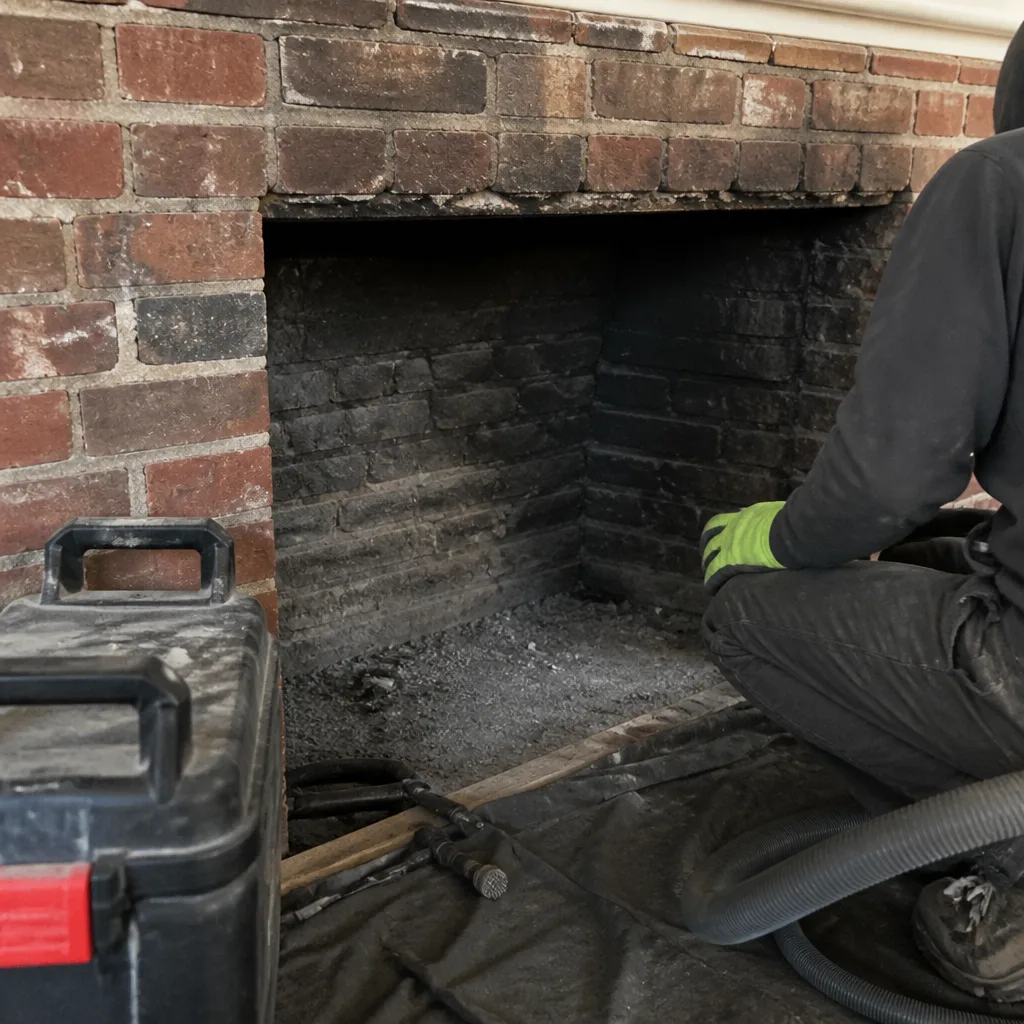 Before
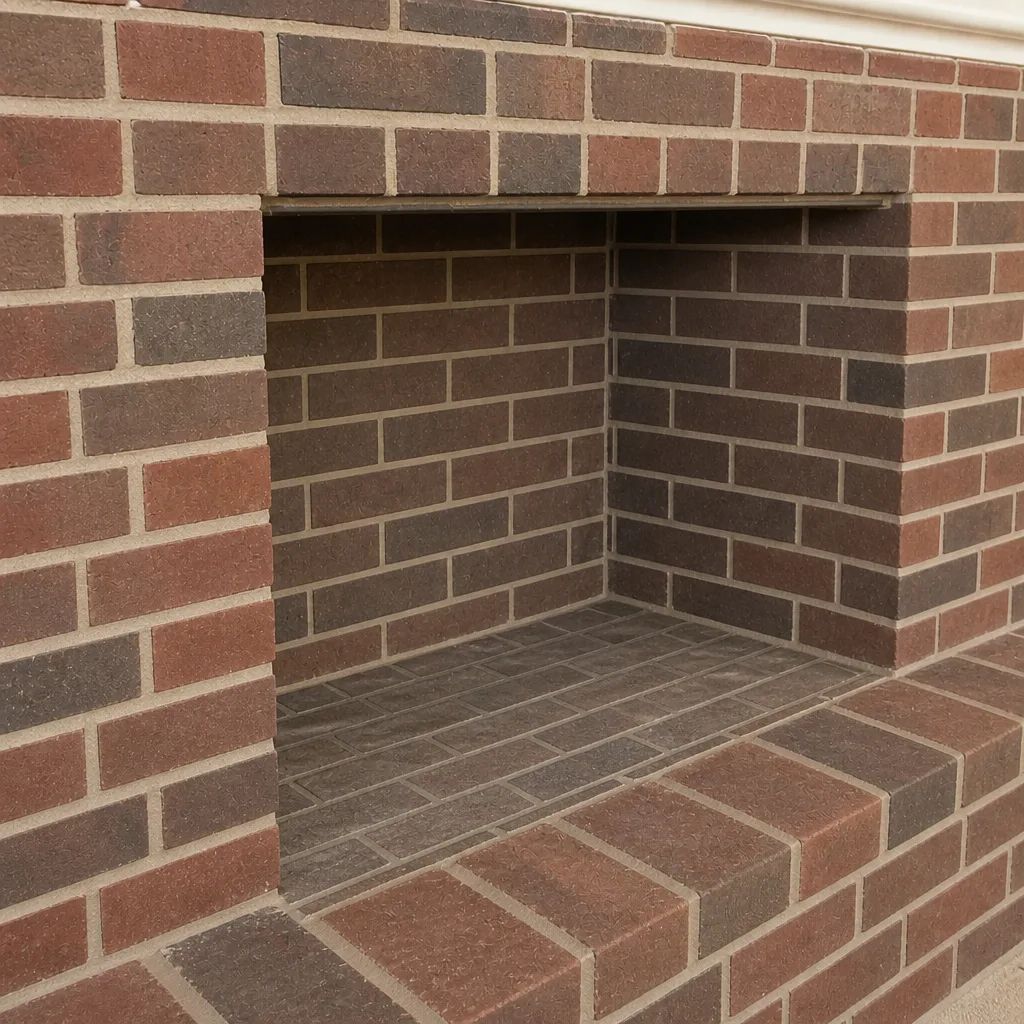 After
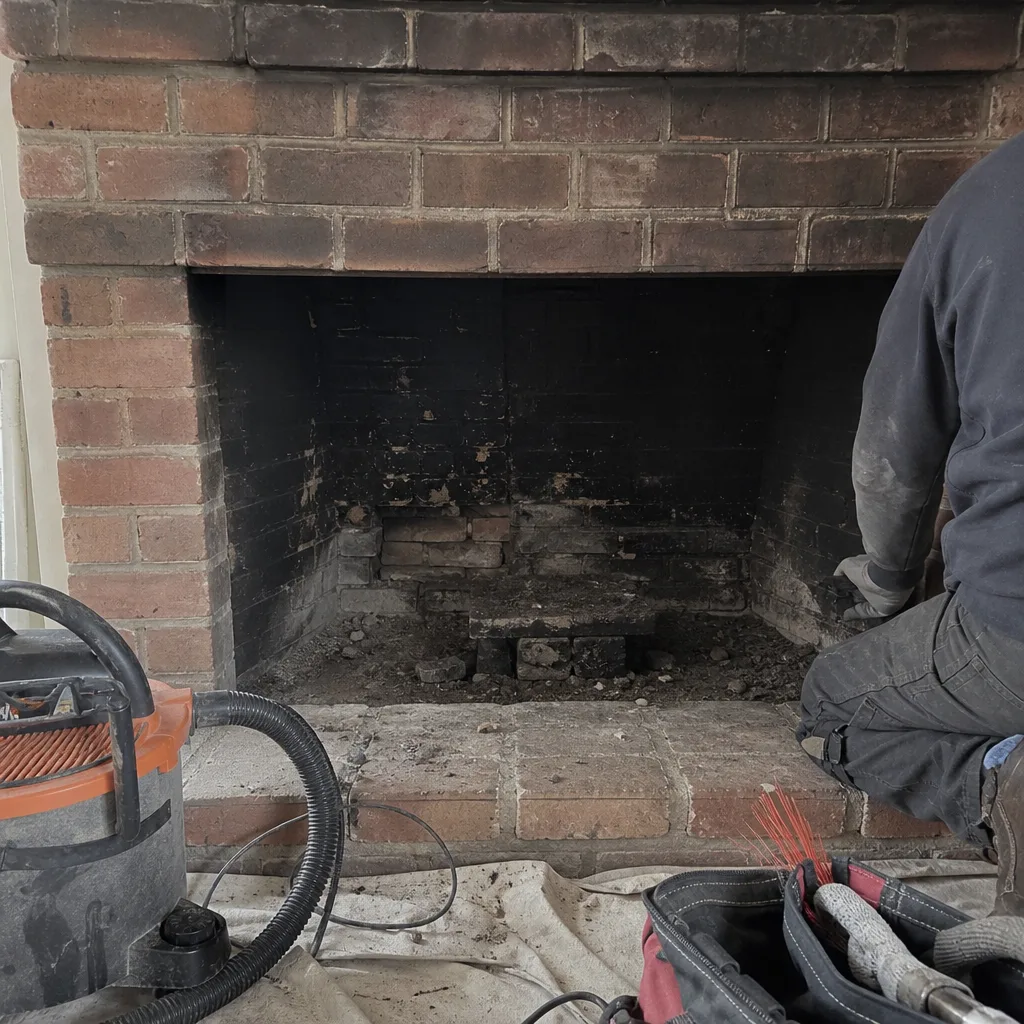 Before
 After
 Before
 After
When to Call a Professional
Book a professional inspection when you’ve just moved into a South Hill home you don’t have the chimney history for, when it’s been a season or more since the last sweep, or when the fire is behaving differently – smoke rolling back into the room, a smell that lingers, a harder time getting a draft started. Call sooner if you can see any of the visible warning signs: crumbling mortar at the joints, a stained crown, a cracked or missing cap, pieces of tile in the firebox, or rust on the firebox metal. Those are structural signals, and they’re worth a look rather than a guess. If you notice any of these and your chimney hasn’t been inspected recently, it’s worth calling before the next fire. South Hill Chimney Sweep offers free estimates in South Hill – call (833) 509-5329. We answer 24/7. Fast dispatch from 7am to 7pm, Sunday through Friday. Nothing gets recommended without camera evidence you can see for yourself.
Frequently Asked Questions
There’s no single best brand – it depends on the surface being treated. HeatShield is the recognized standard for flue resurfacing, Gelco and Olympia Chimney are specified for crown and waterproofing work on masonry, Famco covers terminal and mechanical components, and DuraFlex is a professional liner system. The right approach is to ask which specific product is being used for each part of the job. For a routine sweep, the professional equipment used matters more than a specific brush brand. Call (833) 509-5329 for an exact quote – estimates are free.
Both matter, and neither substitutes for the other. The technician’s skill determines how well the job is done today; the product determines how the job holds up over the following years. In a wet climate like South Hill with meaningful freeze-thaw cycles, the product is what fails first if it’s not rated for the conditions. Ask about products, and also ask to see photos of the inspection so you can verify the technician’s work with your own eyes.
Ask three questions and get answers in writing: which specific liner system is being installed, what the manufacturer warranty term and conditions are, and whether the installer is authorized to install that brand. A liner installed by an unqualified person can void the warranty entirely, which means the product itself is only half the paperwork. Have the warranty term and conditions included in the written estimate. If a quote can’t produce those details, ask for them.
A mason’s mix is designed for fresh, flat work on a sound surface and doesn’t flex; over an aged crown in our climate it cures, shrinks, and cracks at the edges. A purpose-made crown coating is formulated to remain flexible and to bond to a prepared, weathered substrate, which is why it lasts longer. Both look identical on the day they’re applied, so the specification is the only way to know which one you got. Ask for the brand name in the quote. Call (833) 509-5329 for an exact quote – estimates are free.
Yes, it should be part of the same conversation. A cleaning that stops at the firebox leaves the top of your chimney system – the crown and cap – unchecked, and that’s where water intrusion starts. Water is the leading cause of long-term structural damage to chimneys, and a cracked crown is the most common entry point. Have the crown and cap evaluated every time the chimney is cleaned. A chimney sweep should always include a look at the top of the system.
Some professional-grade systems, like HeatShield, require manufacturer authorization to install. A generalist may be able to purchase similar materials, but they won’t be authorized for the brand-specific process, and the manufacturer warranty often won’t apply. For anything going inside the flue or involving the crown, a chimney specialist is the right call. For general masonry outside the chimney system, a specialist may refer – but for the chimney itself, ask for the specification.
The Bottom Line
The brand behind the work is the part of a chimney job you can’t inspect afterward, which is exactly why it needs to be named in the quote. Ask which products go into your crown, liner, and waterproofing, get the warranty terms in writing, and confirm the installer is authorized. In South Hill’s wet, freeze-thaw climate, a cheap material doesn’t fail softly; it fails inside the structure where the damage runs deeper. Choose the company that can tell you what it’s using and why, and that shows you the photos before it recommends a repair. The product specification in the estimate is the single best test of whether the company on the other side of the quote actually understands what it’s doing. This is where South Hill Chimney Sweep is built to answer the question.
Call (833) 509-5329. We answer 24/7. Fast dispatch from 7am to 7pm, Sunday through Friday. Estimates are free, and the written quote sets the final price.
Written by the team at South Hill Chimney Sweep.