
Last updated November 25, 2026
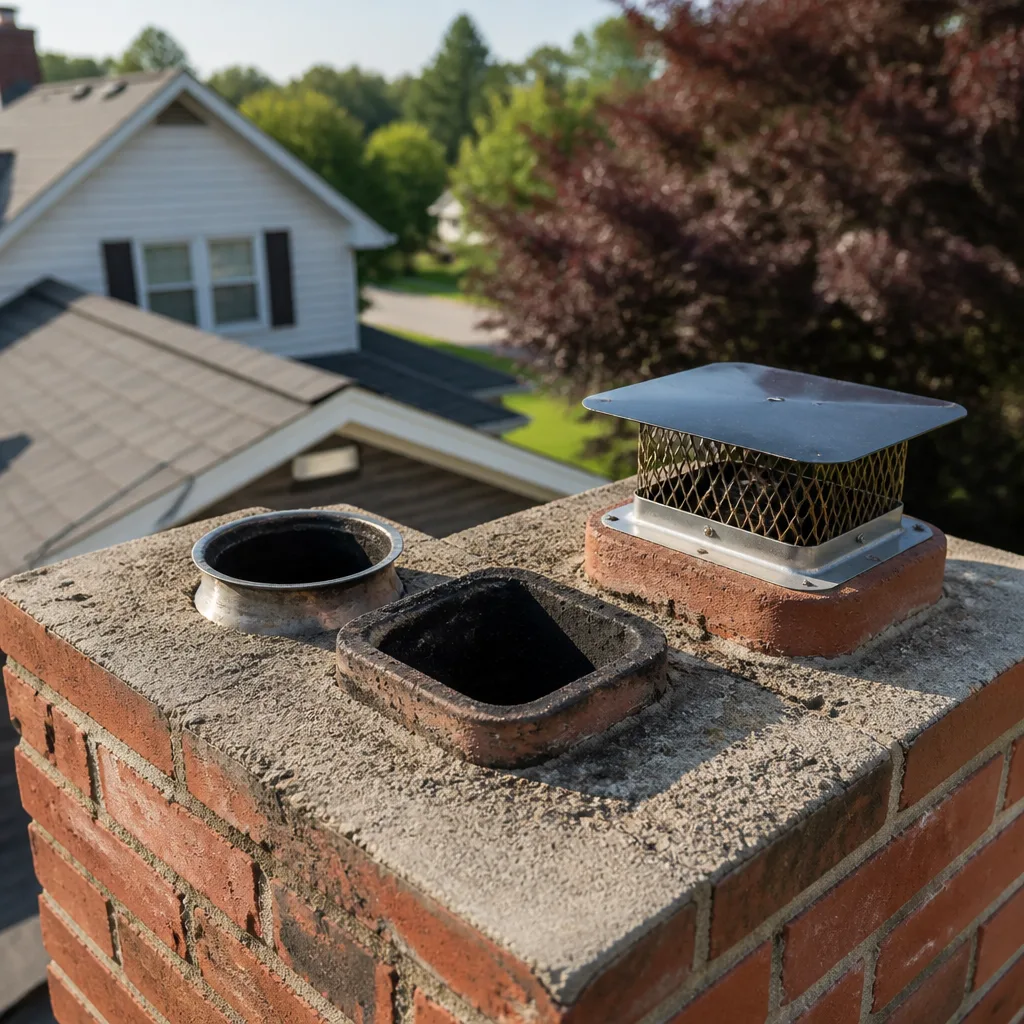 Sweep & inspection
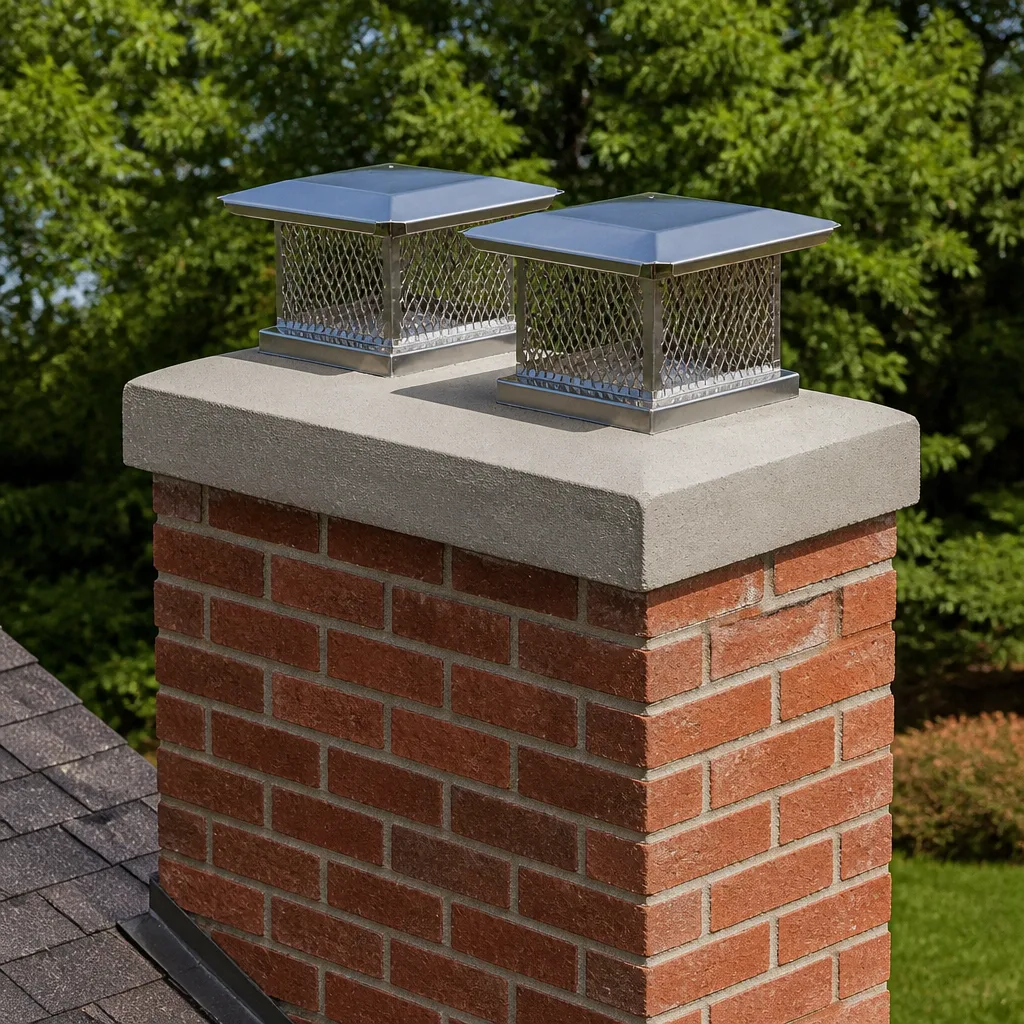 Caps & crowns
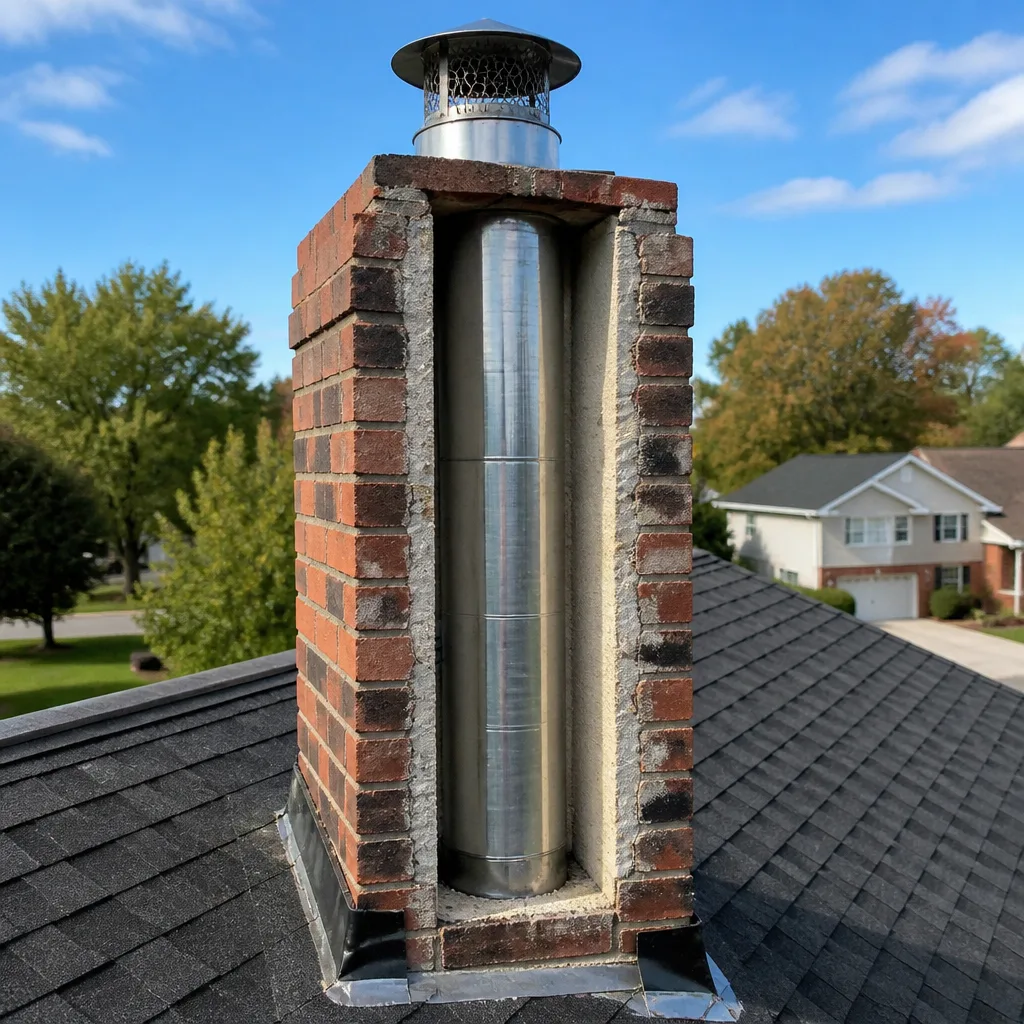 Flue relining
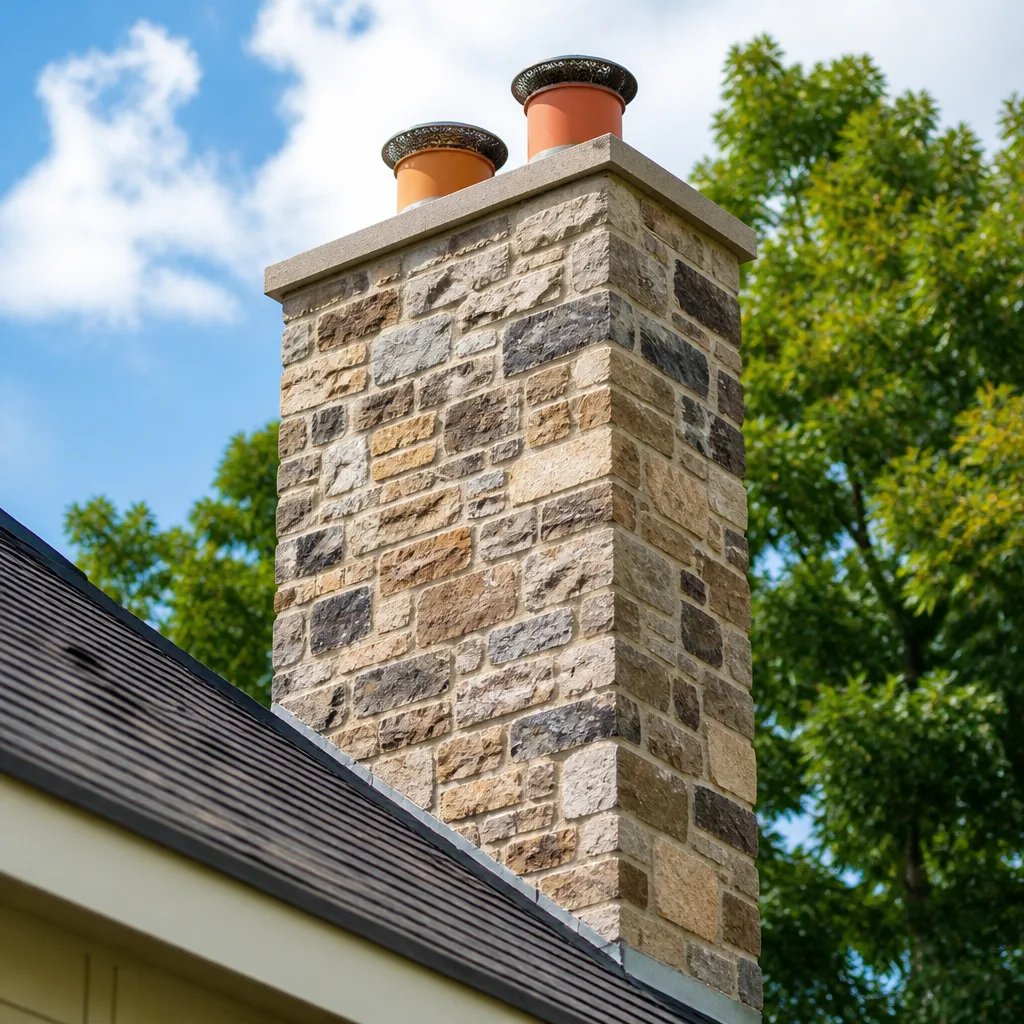 Masonry repair
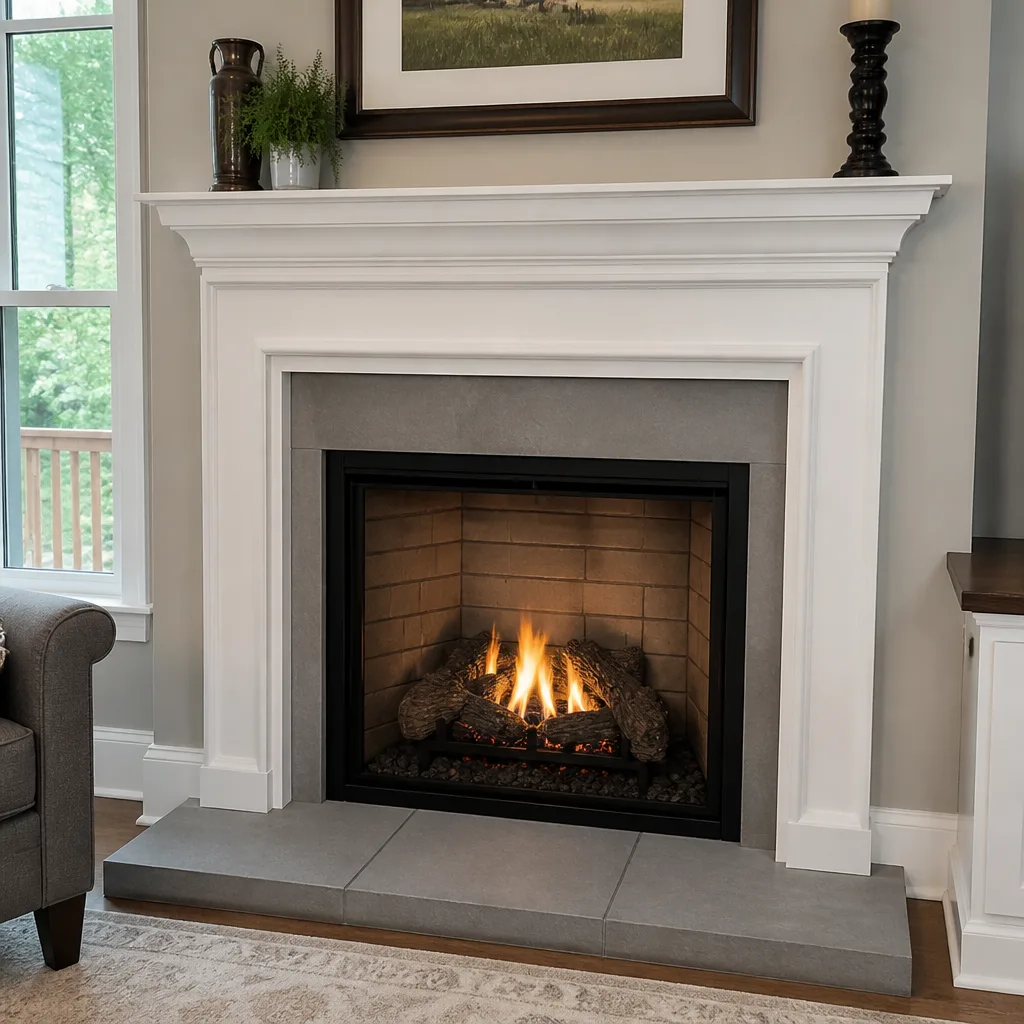 Gas fireplace service
Level 1 sweep and inspection to the NFPA 211 annual standard - flue, crown, cap, and flashing checked and photographed
Chimney sweep logs do not sweep chimneys. They loosen some creosote - which then falls where a brush and vacuum still have to collect it.
Chimney Cleaning Warning Signs: A South Hill Homeowner’s Reference Guide
A white stain on the exterior brick of a chimney isn’t a cosmetic issue. It’s efflorescence, and it means water is already moving through your masonry from the inside out. Most homeowners in South Hill wait for the obvious signals – smoke rolling into the room, a strong soot smell, visible creosote – before they call anyone. Those are late indicators. The warning signs that actually matter show up weeks or months earlier, and they show up on the outside of your chimney, around the cap, at the firebox, and in how your fires behave from one day to the next. This guide covers the upstream signals that South Hill homeowners tend to miss, why they happen in our climate and housing stock, and when each one justifies a professional inspection.
Quick Answer
The most important chimney cleaning warning signs are efflorescence (white staining) on exterior brick, spalling brick faces, inconsistent draft, persistent smoke odor after a fire is out, a crumbling smoke chamber visible from the firebox, and a damaged or missing cap. Any one of these suggests water infiltration, obstruction, or creosote buildup severe enough to warrant a professional inspection before you light another fire. Smoke in the room and heavy soot are late-stage signs, not early ones.
Styles & brands we work with
- Sweep & inspection
- Caps & crowns
- Flue relining
- Masonry repair
- Gas fireplace service
Table of Contents
- Efflorescence: What the White Stain on Your Chimney Brick Actually Means
- Draft Inconsistency: Why Some Fires Draw and Others Don’t
- Persistent Smoke Odor vs. Normal Startup Smell
- Spalling Brick and Freeze-Thaw Damage in South Hill’s Wet Winters
- What a Failing Smoke Chamber Looks Like From the Firebox
- Cap and Crown Damage: The Top-of-System Signs
- Creosote Stages and Why They Decide Your Cleaning Schedule
- How Often Should a South Hill Chimney Be Cleaned?
Efflorescence: What the White Stain on Your Chimney Brick Actually Means
Efflorescence is a chalky white deposit on the surface of brick or mortar. It forms when water moves through masonry, dissolves salts from the brick and mortar, and then evaporates on the exterior face, leaving those salts behind. Homeowners often mistake it for paint residue, bird droppings, or simple weathering. It’s none of those things. When you see efflorescence on a chimney stack, water is getting into the masonry somewhere and working its way out. That water had to enter from somewhere – through a failing cap, a cracked crown, deteriorated mortar joints, or a missing rain cover at the top of the flue.
On a chimney, the entry point matters more than the salt deposit itself. Water moving through brick and mortar leads to three problems that compound over time:
- Mortar joint failure. Water freezes inside the joints during South Hill’s cold months and expands, pushing the joints apart. Once joints open up, more water gets in, and freeze-thaw cycles accelerate the damage.
- Flue liner damage. Moisture combined with creosote forms acidic compounds that attack clay tile liners and metal flue components. A liner that’s compromised is a genuine drafting and safety problem, not a maintenance nuisance.
- Interior staining. Water that enters at the chimney top can track down inside the chase and show up as staining on interior walls or ceiling near the chimney, especially in South Hill homes where the chimney runs through the middle of the house.
The correct response to efflorescence is not to paint over it. Painting traps moisture behind the coating and pushes the damage deeper. The correct response is to find where water is getting in. In our experience, the entry point is most often the chimney crown or the cap. A professional inspection traces the water path, and the repair addresses the source. Since 2015-era South Hill construction, homes in the area often have masonry veneer chimneys with factory-built metal flue systems, and those caps are the first failure point as the sealant ages.
If you see efflorescence, don’t wait for the stain to “get worse.” Call a professional for an inspection. It’s a clear signal that water is already active inside your chimney system.
Draft Inconsistency: Why Some Fires Draw and Others Don’t
Draft is the upward movement of air and combustion gases through the chimney. A well-functioning chimney drafts reliably, day in and day out, given the same conditions. When draft becomes inconsistent – fires that burn well on a mild day but smoke on a windy day, or a fireplace that works fine in the morning but struggles in the evening – something is changing inside the flue or at the cap. That inconsistency is diagnostic.
The most common causes of inconsistent draft in South Hill homes break into three categories:
- Partial obstruction. Creosote accumulates unevenly. A glaze formation can narrow the flue at one point, so the chimney drafts adequately when demand is low and fails when a hot fire sends a larger volume of smoke upward. This pattern is one of the earliest signs of creosote buildup that a sweep will catch before it becomes a serious hazard.
- Cap damage or blockage. A chimney cap with a damaged screen or a cap that has partially collapsed can block the outlet. Bird nests, leaf debris, or a loose cap that shifts in the wind can cause day-to-day variation in draft. A cap that’s intact but undersized for your flue can also cause turbulence and inconsistent flow.
- Architectural and pressure issues. A newer, tightly built home with exhaust fans running can depressurize the space and pull air down the flue. In South Hill homes built during the recent growth period, this is a real consideration. It’s a pressure problem, not a cleaning problem, but distinguishing the two is part of a proper inspection.
A professional inspection with a camera shows whether the flue is clear, whether the cap is intact, and whether the draft problem is mechanical or pressure-related. That distinction matters because the solutions differ. Keep a simple log for a week: note the weather, any fans running, and whether the fire draws. That log helps a technician diagnose the pattern faster. If draft inconsistency is happening, stop using the fireplace until it’s inspected. A partial blockage can escalate from inconsistent draft to smoke backing into the room without much warning.
Persistent Smoke Odor vs. Normal Startup Smell
A wood-burning fireplace smells like smoke when the fire first lights. That’s normal. Cool air in the flue takes a moment to warm up, and until it does, a small amount of smoke can escape the firebox. The smell dissipates within a few minutes as the flue warms, and it’s gone entirely once the fire is established. That startup smell is not a warning sign.
Persistent odor is different. If your chimney or fireplace area smells like smoke when there’s no fire burning, or if the smoke smell lingers for hours after the fire is out, something is releasing odor into the home. There are three common explanations:
- Active creosote accumulation. Creosote is a tar-like residue formed by incomplete combustion. It has a strong, persistent smell, especially on humid days or during the warmer months when there’s no draft to carry it up and out. If you can smell creosote in the living area when the fireplace is cold, there’s enough of it in the flue to warrant a sweep.
- Animal intrusion. Birds, squirrels, and raccoons will enter an uncapped or damaged chimney. Nests, feathers, droppings, and animal remains create a distinctly different smell – often described as sharper and more organic than creosote. It’s especially common during spring when birds look for nesting sites. Any animal activity in the flue requires cleaning and a cap inspection.
- Water intrusion and mildew. Moisture in the chimney chase can create a musty smell that mixes with creosote odor. This connects back to the efflorescence issue. Odor plus staining on the exterior brick is a strong indication that water is involved.
Here’s a practical way to tell the difference: open the damper and turn on the room exhaust fan for a few minutes. If odor draws up the flue, it’s inside the flue. If the smell remains, it may be in the chase or the surrounding structure. Either way, an inspection tells you what’s actually happening. Persistent odor is rarely a good thing to wait out.
Spalling Brick and Freeze-Thaw Damage in South Hill’s Wet Winters
Spalling is when the face of a brick breaks off, exposing the softer interior clay. It looks like a brick that’s been chipped or has a rough, popped surface. Homeowners sometimes mistake it for impact damage or poor original construction. On a chimney in South Hill, spalling almost always means the same thing: water is getting into the brick and then freezing.
The freeze-thaw cycle is the mechanism. Water soaks into the porous brick face. When the temperature drops below freezing – which happens regularly in South Hill’s cold winter months – that water expands. The expansion creates internal pressure that eventually pops the brick face off. Once the face is gone, the softer interior is exposed, absorbs more water, and deteriorates faster. Spalling on a chimney isn’t a stable condition; it progresses.
Patterns to look for, in rough order of severity:
- Isolated spalls near the top of the stack. Usually indicates water entering at the crown or cap. The stack takes the most weather, so damage shows up there first.
- Spalling along one face of the chimney. Points to the prevailing weather side and often means the mortar joints on that side have opened up. Repointing with proper materials is usually the fix.
- Widespread spalling across multiple courses. This is the most serious pattern. It indicates water saturation of the entire masonry assembly, often from a cracked crown combined with deteriorated joints. At this point, the chimney may need partial rebuild rather than repointing.
- Spalling mixed with efflorescence and rust staining. Water is entering at the top and moving down through the masonry, possibly rusting the metal cap or flashing components along the way.
Prevention is straightforward once the water source is identified. A sound crown, intact mortar joints, and a properly fitted cap keep the masonry dry. Repair is far cheaper than rebuilding a spalled stack. If you see brick faces flaking off your chimney in South Hill, have it inspected before the next winter. Get it documented with photos so you can track whether the damage is progressing.
What a Failing Smoke Chamber Looks Like From the Firebox
The smoke chamber is the sloped area above the damper and below the flue. It’s where smoke transitions from the wide firebox opening into the narrower flue. You can see part of it from the firebox opening without tools – just open the damper, take a flashlight, and look up. What you’re looking for is the state of the masonry surface that funnels smoke upward.
A healthy smoke chamber has smooth, intact surfaces. Parging – the applied mortar coating that smooths the chamber walls – should be continuous, with no gaps or rough patches. What a failing chamber looks like:
- Parging that’s flaking or missing. The rough brick or block underneath is exposed. That roughness creates turbulence, which interferes with draft. It also gives creosote a place to accumulate.
- Visible cracks in the chamber surfaces. Cracks can let smoke and gases escape around the damper rather than going up the flue. If they extend through the chamber structure, they’re a serious safety concern.
- Heavy creosote accumulation on the chamber walls. This is creosote that’s deposited above the firebox where it’s harder to sweep clean. When you can see a thick, dark, tar-like coating on the visible portion of the smoke chamber, there’s more above it.
- Loose mortar or debris on the damper shelf. Crumbling material from the chamber interior collects on the damper frame. That’s material that used to be part of your chimney structure.
A failing smoke chamber can be resurfaced rather than rebuilt. HeatShield is a professional resurfacing system applied to the chamber interior to restore a smooth, sealed surface. It’s a specialized repair capability – not all chimney service companies offer it. If the smoke chamber is visibly deteriorating, it’s worth asking specifically whether resurfacing is an option before assuming the chimney needs major masonry work.
This is one of the checks a homeowner can do without tools. A flashlight and two minutes tells you whether the interior is smooth and intact or rough and flaking. If it’s the latter, get a professional inspection before lighting another fire.
Cap and Crown Damage: The Top-of-System Signs
The crown is the sloping concrete or mortar cap at the top of the chimney stack. It sheds water away from the masonry. The cap is the metal or mesh cover that sits on top of the flue and keeps water, animals, and debris out. Both are structural protection, not decorative. When either fails, water gets into the system, and the problems cascade downward.
From the ground, using binoculars or a phone camera with zoom, look for:
- Cracks in the crown. Hairline cracks often widen with freeze-thaw cycles. A crown with visible cracks is shedding less water than it needs to, and that water is going into the masonry below.
- A crown that’s crumbling or spalling. If the crown itself is showing broken edges or is coming apart, it needs to be replaced. A crown that’s too thin or made of the wrong mix will fail faster than a properly constructed one.
- Cap damage. Bent, loose, or missing cap screens, missing rain covers, or a cap that’s clearly shifted to one side all indicate it’s time for replacement. An uncapped flue is an open invitation to rain, birds, and leaf debris.
- Rust staining below the cap. Rust streaks on the chimney exterior usually point to a metal cap or flashing that’s failing.
- Loose flashing at the roofline. Flashing is the metal that seals the chimney to the roof. Failed flashing is a common source of interior leaks and should be inspected along with the crown and cap.
Crown and cap work is the top-of-system protection that cleaning-only providers often don’t handle. A sweep without cap and crown service cleans the flue but leaves the entry point open. In South Hill, where we get substantial rain through the fall and winter, that’s the difference between a chimney that stays dry and one that cycles through freeze-thaw damage year after year. Cap and crown replacement uses materials from brands like Copperfield and Famco, and the work is part of the same visit as a sweep or inspection.
Any staining, cracking, or material loss on the crown or cap is a signal to inspect the full system. Top-of-chimney damage is almost always the upstream cause of downstream symptoms like efflorescence and spalling.
Creosote Stages and Why They Decide Your Cleaning Schedule
Creosote is the residue of incomplete combustion. It’s what chimney sweeps are primarily there to remove. It forms in three recognizable stages, and each stage tells you something different about your fireplace, your wood, and your burning habits.
- Stage 1: Sooty, flaky deposit. This is fresh, light creosote that brushes off easily with standard sweep tools. It’s a normal byproduct of burning wood. It’s the stage that a routine annual sweep keeps under control.
- Stage 2: Crumbly, hardened deposit. This creosote has baked onto the flue surface. It’s harder to remove and requires more aggressive mechanical cleaning. Stage 2 buildup is a sign that the flue hasn’t been swept often enough for the burning habits of the household.
- Stage 3: Glazed, tar-like deposit. This is the most serious stage. The creosote has become a hard, glassy layer on the flue walls, often in a narrow band where the flue diameter changes or near the smoke chamber. It’s highly flammable and difficult to remove. Stage 3 accumulation is a chimney fire risk and requires specialized removal methods, sometimes including chemical treatment before mechanical cleaning.
Wood quality matters. Unseasoned or wet wood burns incompletely and produces far more creosote than properly dried fuel. In South Hill, where wood is often seasoned outdoors, our wet fall and winter make proper drying difficult. Wood that’s been stored uncovered through the wet season will burn poorly and produce more creosote than wood kept dry. That’s one reason creosote accumulation often runs ahead of the “annual sweep” schedule for homeowners with wet wood. A sweep and inspection identifies what stage of creosote is present and how urgently it needs to be removed.
How Often Should a South Hill Chimney Be Cleaned?
The general rule is once a year for a wood-burning fireplace that sees regular use. For anyone burning more than a cord of wood per season, or burning wood in an older fireplace with a large firebox and no modern combustion controls, more frequent cleaning may be needed. For a gas fireplace, the schedule is different – gas burns cleanly, so the primary concern is the vent system and the chimney structure, not creosote. An annual inspection still matters.
South Hill’s wet winter climate affects how much moisture gets into the chimney and how creosote behaves. Creosote absorbs moisture, and wet creosote is more corrosive to the liners and more prone to aggravate the draft issues covered earlier. That’s a good reason to inspect in the fall before the burning season begins, rather than trying to catch up mid-winter. An inspection before the first fire confirms the flue is clear, the cap is intact, the crown is sound, and the smoke chamber is in usable condition.
There’s another reason to inspect before the season: it gives you time to schedule any repair without pressure. A chimney found in good condition means you can proceed with a routine chimney sweep and be done. A chimney with a crown crack or a failing smoke chamber means you have a project, and you want to know that in September rather than the week you meant to light your first fire. If the inspection turns up liner or chamber damage, our use of DuraFlex flexible liner systems means older or damaged flues can often be relined with a code-compliant solution rather than requiring demolition. HeatShield is available for chamber resurfacing. And if structural brick repair is needed, that work falls under our full-scope chimney repair capability.
The honest guidance: sweep and inspect annually, and inspect immediately if you see any of the warning signs in this guide. A chimney that’s burning cleanly with no symptoms doesn’t need anything more than that.
Common Mistakes to Avoid
- Painting over efflorescence. Paint traps moisture inside the masonry and accelerates spalling. The correct treatment is to find and fix the water entry point, usually at the crown or cap.
- Burning wet wood to “save money.” Wet wood burns incompletely and produces far more creosote than properly seasoned fuel. The savings in wood cost come back as accelerated flue buildup. In South Hill, wood stored uncovered through the wet season is a common culprit.
- Waiting for smoke in the room before calling. Smoke backing into the room is a late-stage signal. Draft inconsistency, persistent odor, and visible exterior damage are the earlier signs worth acting on.
- Skipping the inspection because the sweep was “fine.” A sweep removes creosote; it doesn’t assess the crown, cap, flashing, or smoke chamber. The inspection is what catches structural problems before they become repair projects.
- Trusting a cap inspection to a generalist. A roofer or handyman may look at the top of the chimney, but chimney cap and crown work is a specific trade. Water intrusion traced from a chimney cap needs a chimney specialist to identify and correct it properly.
- Treating a gas fireplace as maintenance-free. Gas burns cleanly, but the vent and chimney structure still need inspection. A gas appliance venting into a deteriorated chimney is a real concern.
- Ignoring the smoke chamber. Homeowners focus on the firebox and the flue and skip the chamber between them. It’s the transition point where draft problems and creosote accumulation concentrate, and it’s visible from the firebox with a flashlight.
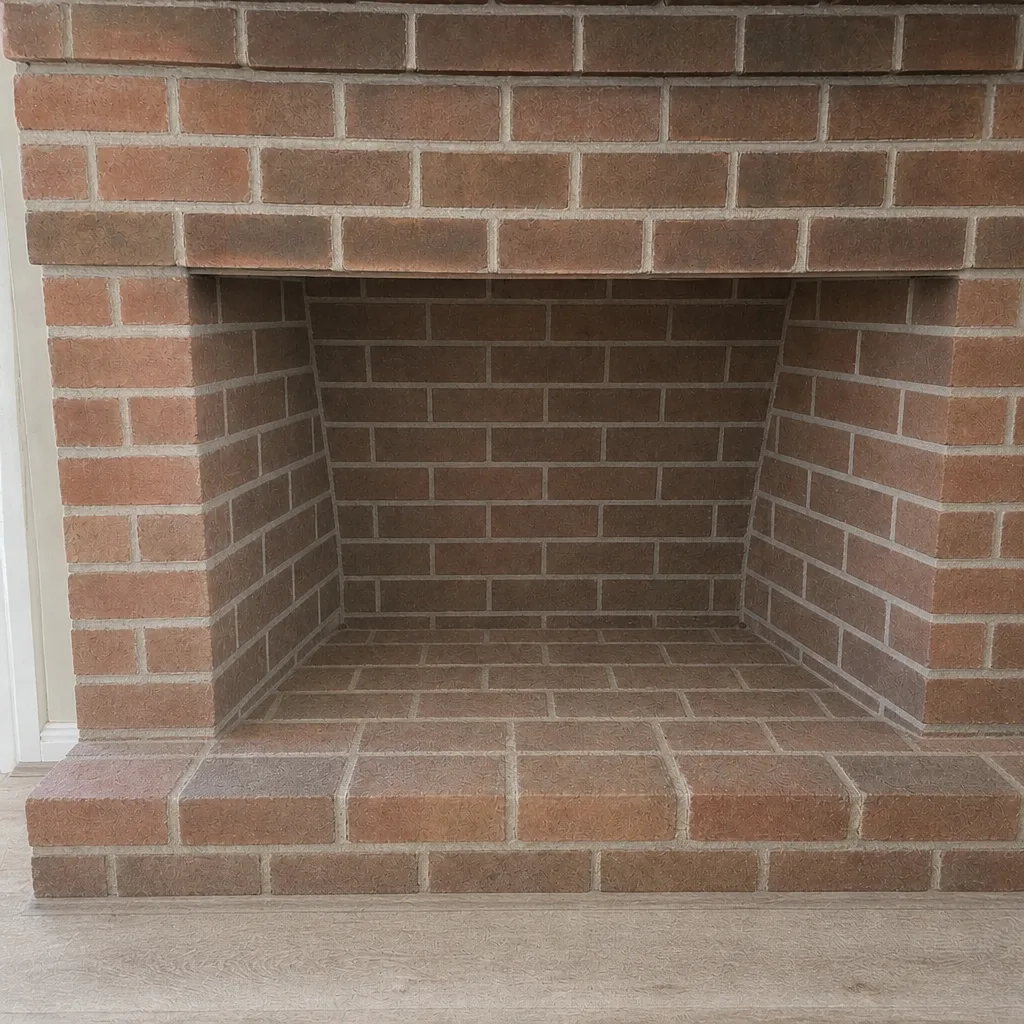
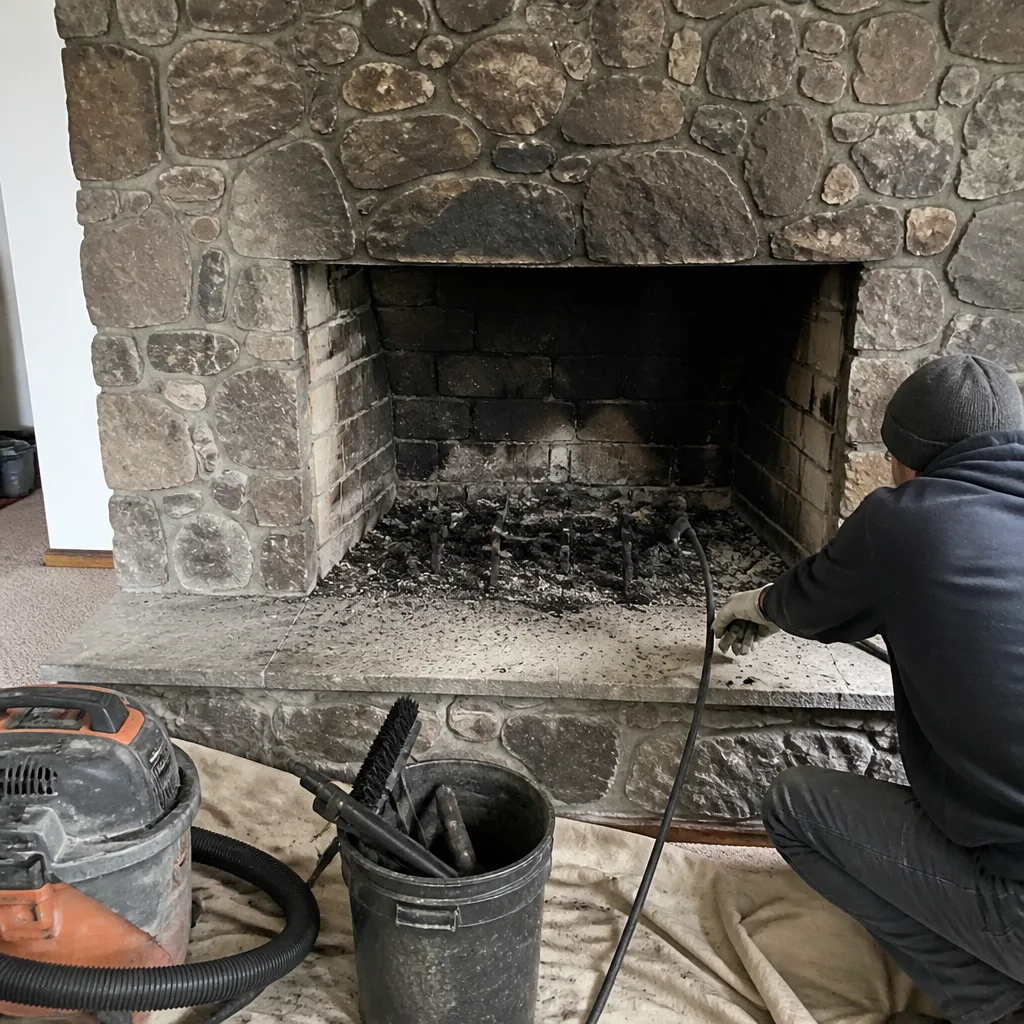
See the difference
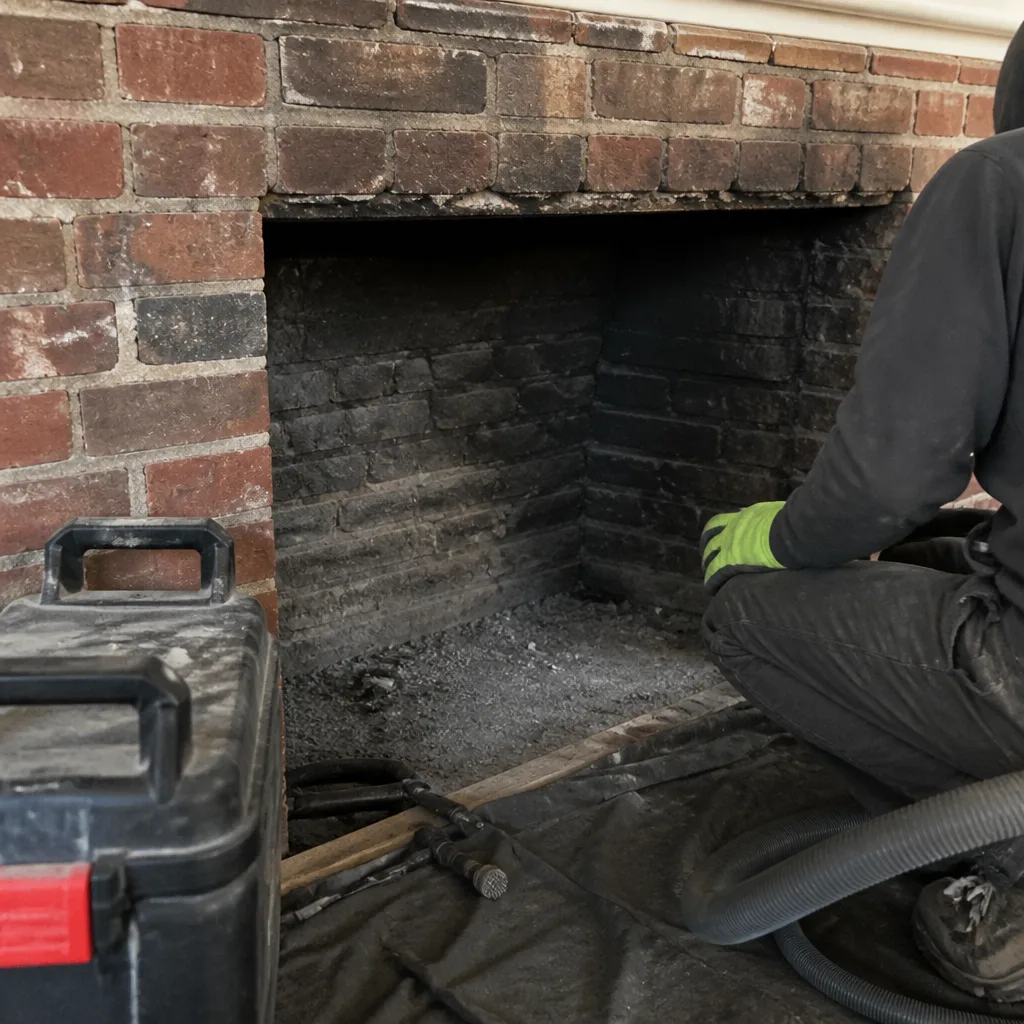 Before
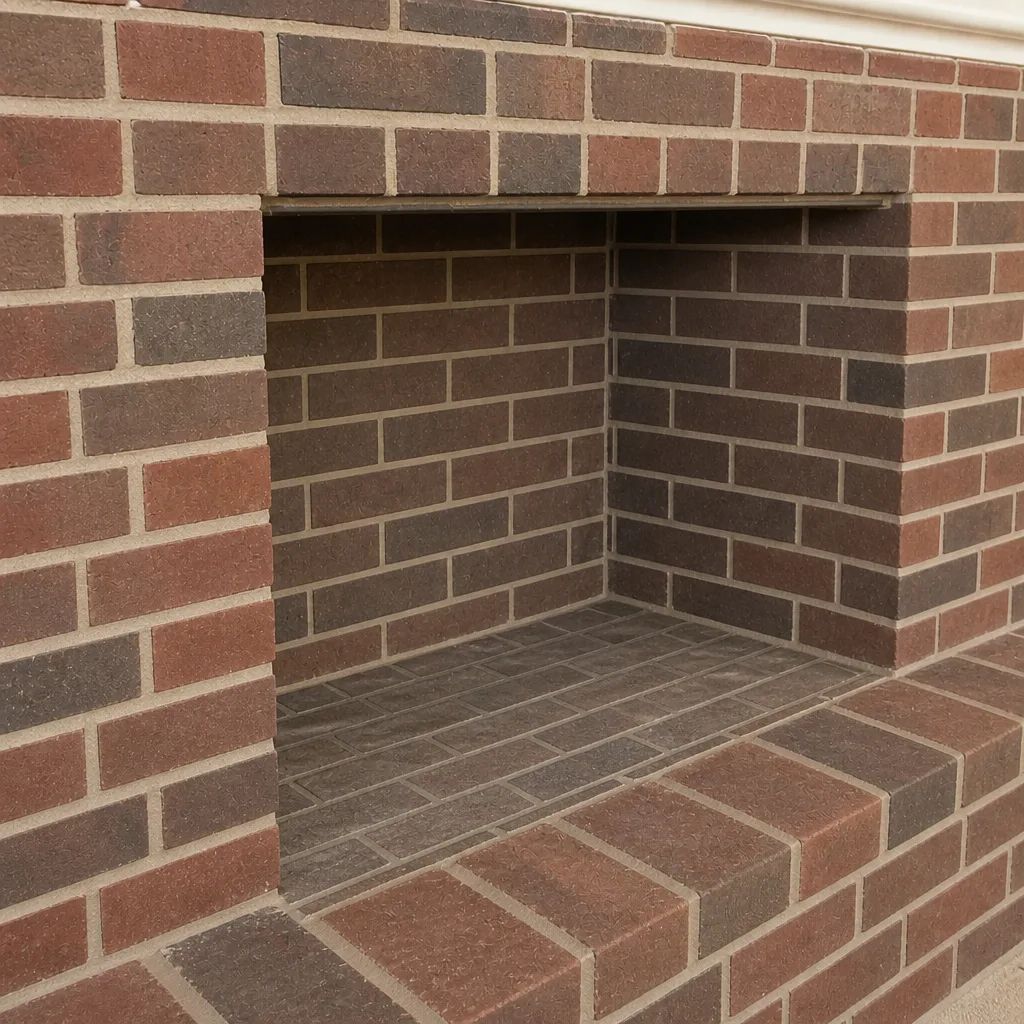 After
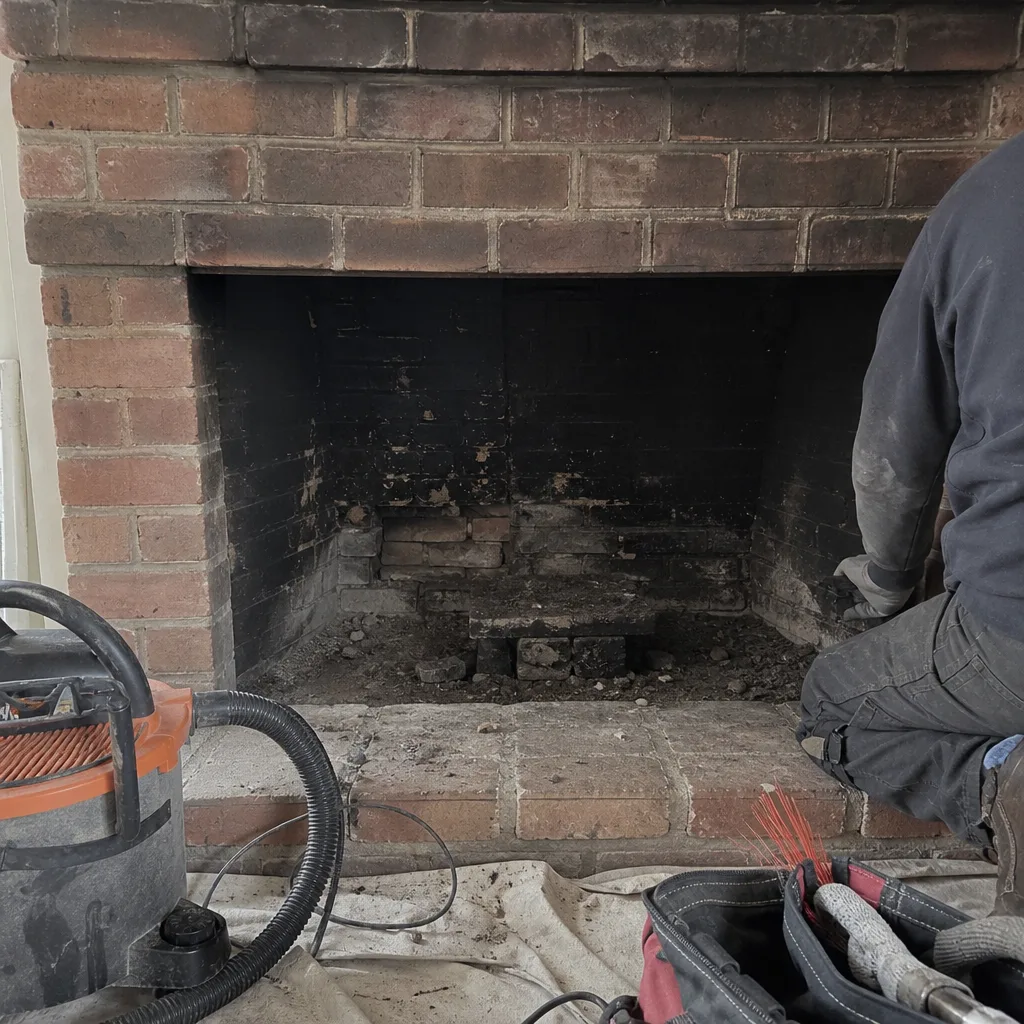 Before
 After
 Before
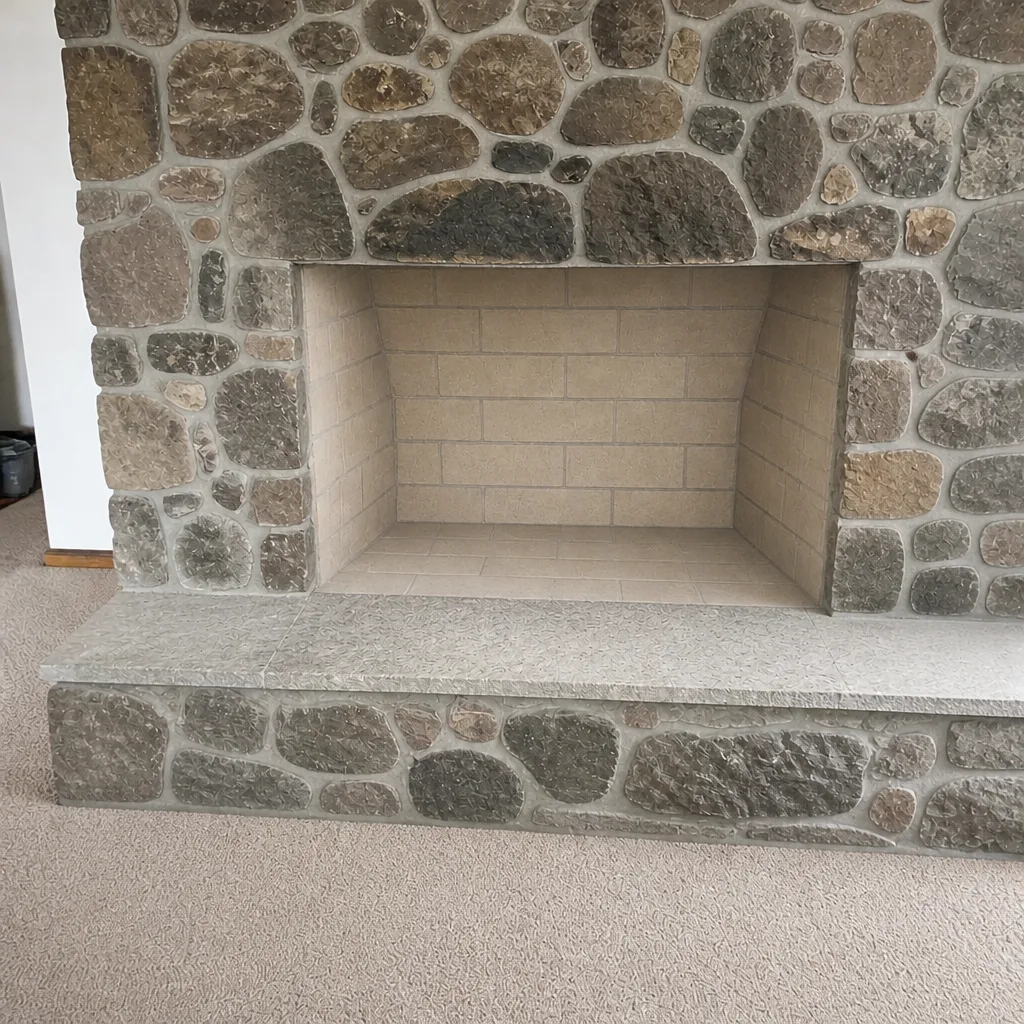 After
When to Call a Professional
Call a professional if you’ve seen any of the upstream warning signs in this guide: efflorescence or spalling on the exterior brick, inconsistent draft, persistent smoke odor when no fire is burning, visible flaking or cracking in the smoke chamber, or a crown or cap that’s damaged. Also call if it’s been more than a year since your last sweep and you’ve been burning regularly, if you’ve noticed soot or staining on the walls near the chimney, or if you’ve had animal activity in the flue.
The hesitation many homeowners have is the fear of being told they need thousands of dollars of repair work they can’t verify. That’s a fair concern. A proper inspection includes a camera inspection and a photo report, so you see exactly what the technician sees – the crown, the cap, the smoke chamber, the flue liners, the firebox. South Hill Chimney Sweep offers free estimates in South Hill. Call (833) 509-5329 to schedule an inspection. We answer 24/7. Fast dispatch from 7am to 7pm, Sunday through Friday.
Frequently Asked Questions
The earliest warnings are efflorescence (white staining) on exterior brick, spalling brick faces, inconsistent draft, persistent smoke odor when no fire is burning, a deteriorating smoke chamber visible from the firebox, and a damaged or missing cap. Smoke in the room and heavy soot are late-stage signs that should have been caught earlier. Call (833) 509-5329 for an inspection – the estimate is free.
A white stain is efflorescence, and it means water is moving through the masonry and evaporating on the surface, leaving salts behind. It’s not cosmetic. The water is entering from somewhere – most often a cracked crown, a failing cap, or deteriorated mortar joints – and needs to be traced and stopped. Call (833) 509-5329 to schedule an inspection.
Once a year for a wood-burning fireplace in regular use, with more frequent cleaning for heavy use or poorly seasoned wood. Gas fireplaces need annual inspection of the vent and structure even though creosote isn’t the concern. Fall inspection before the burning season gives time to schedule any needed repair without pressure. Call (833) 509-5329 to book an inspection – estimates are free.
Inconsistent draft usually points to partial obstruction (creosote narrowing the flue), cap damage, or a pressure problem in the home. A camera inspection distinguishes between these causes, which matters because the solutions differ. Stop using the fireplace until it’s inspected. Call (833) 509-5329 to book an inspection – estimates are free.
A brief smoke smell during startup is normal and disappears as the flue warms. Persistent odor after the fire is out is not normal – it usually indicates active creosote accumulation or animal intrusion in the flue. Both warrant an inspection. Call (833) 509-5329 to schedule one – the estimate is free.
The smoke chamber is the sloped area between the firebox and the flue, where smoke transitions from the wide opening into the narrower flue. When its parged surfaces crack, flake, or accumulate heavy creosote, draft suffers and smoke can escape around the damper. It’s visible from the firebox opening with a flashlight. If it looks rough or flaking, get it inspected. Call (833) 509-5329 – estimates are free.
The Bottom Line
Chimney problems rarely start with smoke in the room. They start with water moving through masonry, a cap that’s failed, a flue narrowing from creosote, and a smoke chamber that’s losing its smooth surface. Those upstream signals are visible long before the obvious problems, if you know where to look. Efflorescence, spalling brick, inconsistent draft, persistent odor, a failing smoke chamber, and a damaged crown or cap are the warning signs that should prompt a call – not a paint job or a wait-and-see.
An annual sweep and inspection keeps a healthy chimney healthy. If the inspection finds damage, you’ll see it yourself in the camera report before any repair is quoted. From the firebox to the crown, we handle the full system: sweep, inspection, fireplace repair, chimney repair, and cap and crown work, using products from DuraFlex, HeatShield, Gelco, Olympia Chimney, and Famco. That means one company for the whole chimney, not a referral runaround when the inspection turns up something.
If you’ve spotted any of the warnings in this guide, or if it’s simply been a while, the next step is a professional inspection. South Hill Chimney Sweep offers free estimates in South Hill. Call (833) 509-5329. We answer 24/7. Fast dispatch from 7am to 7pm, Sunday through Friday. Our technicians have up to 15 years of experience, and the technician will tell you exactly what was found and what it means before quoting a single repair. If the chimney is in good shape, we’ll say so – and explain what work, if any, can safely wait.
Learn more about our full service offerings at South Hill Chimney Sweep.
Written by the team at South Hill Chimney Sweep.