
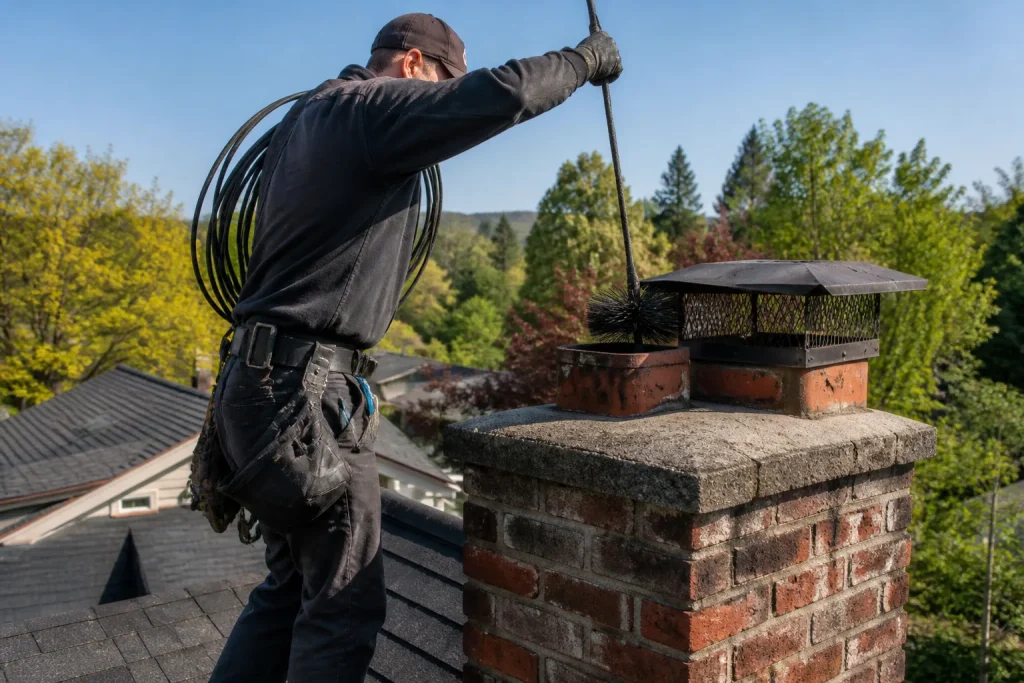
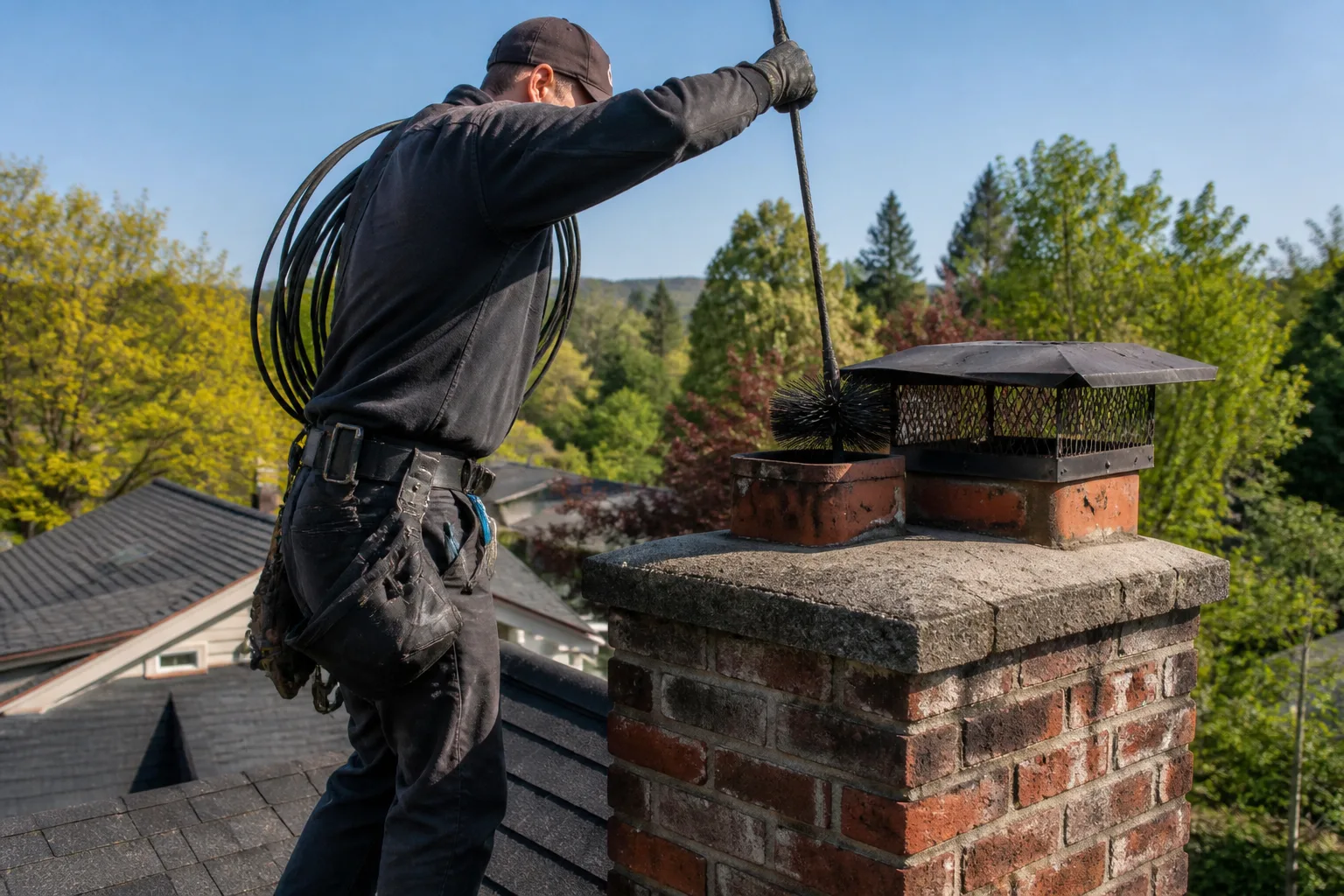
Top Signs You Need Chimney Cleaning Service – Don’t Ignore These
The honest answer is that most chimney problems worth catching early don’t announce themselves. Smoke smell and slow drafts are real signals, and you should pay attention to them. But the conditions most likely to cause a house fire – advanced glazed creosote, hairline cracks in the liner, a collapsing smoke chamber – are often odorless, invisible from inside the firebox, and impossible to detect without a proper inspection. Waiting for symptoms to appear is the wrong strategy, and in South Hill that’s especially true.
If you’d rather have a professional take a look than climb a ladder yourself, call (833) 509-5329. We answer 24/7. Fast dispatch from 7am to 7pm, Sunday through Friday.
What are the warning signs you can actually see, smell, or hear?
Some problems do give you something to work with. Here’s what South Hill homeowners can detect on their own, roughly in order of how much they should worry you:
- A strong smoky smell in the room, even when the fireplace is cold. That’s a sign draft is reversing or creosote buildup is thick enough to smell. Worth a call.
- Smoke spilling into the room when you light a fire. Draft is struggling. Could be a blockage, a cold flue, or a damaged liner. Stop burning until someone checks it.
- A weak or sluggish draft. Fires that are hard to start, smoke that hangs around, or a fire that just won’t draw.
- Visible debris in the firebox – fallen soot, flakes of creosote, bits of mortar, or nesting material. Animal sounds in the flue count here too.
- A dark, glossy crust inside the flue, visible with a flashlight. If you can see it, it’s advanced. More on that below.
Those are real signals, and you shouldn’t ignore them. But notice what’s on the list and what isn’t. A cracked liner? Not there. A deteriorating smoke chamber? Not there. Stage 3 glazed creosote hidden above a bend? You’d never see it.
Why is the most dangerous sign the one you can’t detect?
Because a chimney can be clean-looking from the firebox and still be a fire hazard. The three conditions that matter most are the ones a homeowner almost never catches:
- Stage 2 and stage 3 glazed creosote. Creosote moves from sooty flakes (stage 1) to a crunchy, hardened layer (stage 2) to a shiny, tar-like glaze (stage 3) that’s baked onto the flue walls. Stage 3 is the most combustible, and it doesn’t melt away with another fire. Worse, it can look like a clean dark flue from a distance. Sweeping with a brush often won’t remove it; it needs chemical treatment or professional removal.
- Hairline cracks in the liner. A Clay tile flue or a metal liner can develop cracks you’d never spot from below. A crack lets heat and carbon monoxide reach framing or living space.
- A deteriorating smoke chamber. The corbled area above the damper collects creosote and can spall and crack over time. It’s the hardest part of the system to see without a camera.
This is why “the fire burns fine” isn’t clearance. It just means you haven’t hit the problem yet. A professional inspection with a camera is the only way to know for sure.
How fast does creosote build up in South Hill’s wet climate?
Faster than most homeowners expect. South Hill’s wet, cool fall and damp winters mean longer shoulder seasons where people burn wood that isn’t fully seasoned, and more low, smoldering fires that produce creosote rather than a hot, clean burn. The btu-sapping dampness also gets into wood stacks and fireplace wood.
In practical terms, the things that accelerate buildup are:
- Frequency of use. Regular burning over a full season, not just occasional evening fires.
- Wood type. Green, wet, or softwood-heavy fuel burns cooler and deposits more.
- Burn habits. Damping a fire down and letting it smolder overnight (a common temptation when it’s raining) is creosote’s best friend.
The catch is that buildup isn’t linear – the signs of trouble don’t appear at a predictable interval. Two homes that burn the same amount of wood can end up in very different shape. That variability is exactly why a routine South Hill chimney sweep once a year (or more if you burn heavily) is the baseline, and why an inspection matters even when nothing seems wrong.
What does a “seems fine” chimney actually mean – and why isn’t that clearance?
Most chimneys that need serious repair look perfectly normal from the living room. The fire draws, the box looks clean, nothing smells. That’s a chimney that seems fine – a guess based on the only part you can see. A verified chimney has been inspected with a camera, the interior checked, and the results documented. Only one of those two states actually tells you anything.
The gap matters because the conditions that cause chimney fires and carbon monoxide exposure don’t produce a warning at the firebox. A flue that drafts well can still have a cracked tile or a stage 3 creosote glaze higher up. We’ve seen plenty of chimneys that “seemed fine” until the camera said otherwise. And we’ve seen plenty of good chimneys come back clean with nothing needed – which is information worth having too.
We’ll tell you exactly what we found and what it means before we quote a single repair. Some work can wait; some can’t; the camera report tells us which. We use HeatShield for resurfacing and DuraFlex flexible liners when a flue needs relining – professional-grade options, not the cheapest ones on the shelf.
When should South Hill homeowners schedule an inspection?
The best window is late summer into early fall, before you light the first fire of the season. In South Hill, that means August through early October: the wet season is still ahead, the chimney has had a summer to dry out, and any repairs can be done without a fire already burning in the box. Come November, a cold, damp flue and a busy firebox make both inspection and repair harder to do well.
Think of it as a liability check before the season starts, not maintenance afterward. If you’re already noticing smoke, odor, or draft trouble, don’t wait for the calendar – stop burning and get it inspected. Those are the cases where the symptoms are real, and where the camera and a trained eye catch what you can’t.
When to call a pro
If any of these sounds familiar, it’s time for a proper look rather than another season of waiting:
- You’ve burned all season and haven’t had a sweep in over a year.
- You see any signs of stage 2 or stage 3 glazed creosote.
- The fire doesn’t draw the way it used to, or smoke rolls into the room.
- You hear animals in the chimney or see debris dropping into the firebox.
- Your liner looks damaged, missing tiles, or you’re not sure.
Our technicians have up to 15 years of experience and can cover the whole system – from the firebox to the crown. We install products from DuraFlex, Olympia Chimney, Famco, and Copperfield, and coordinate with HeatShield for liner restoration, so you’re not bouncing between a sweeper and a separate repair company.
Related services in South Hill: if you suspect your flue or firebox needs work, start with a chimney sweep, or book a fireplace repair if the issue is with the firebox itself. If the damage is structural, chimney repair covers cracks, crown, and cap. You can find everything we do on our South Hill Chimney Sweep page.
The Bottom Line
The signs you can see and smell are worth acting on, but they’re not the whole story. The conditions most likely to cause a chimney fire – stage 3 glazed creosote, liner cracks, a failing smoke chamber – are invisible from the firebox and only show up during an inspection. In South Hill’s wet climate, creosote builds faster than many homeowners expect, so frequency of use tells you less than a camera does. The right move is simple: don’t wait for symptoms. Get an inspection before the heating season starts, and let the report tell you what actually needs fixing.
And a reminder that a chimney cap and crown are the top-of-system pieces that protect everything beneath them – water intrusion is one of the leading causes of long-term chimney damage. If you’re in South Hill and need help, South Hill Chimney Sweep offers free estimates – call (833) 509-5329. We answer 24/7. Fast dispatch from 7am to 7pm, Sunday through Friday.
Frequently Asked Questions
Most homes burning wood regularly should be swept once a year, and more often if you burn heavily, use unseasoned wood, or smolder fires frequently. Gas fireplaces still need an annual inspection, even though there’s no creosote to sweep. In South Hill’s damp climate, an annual sweep paired with a camera inspection is the baseline that keeps the flue in known condition.
It’s a shiny, tar-like, hardened glaze baked onto the inside of the flue, often dark brown to black. It’s the most combustible stage of creosote and a common cause of chimney fires. It usually isn’t visible from the firebox and requires a camera inspection to confirm. Standard brushing often won’t remove it; it needs professional treatment.
Not always. Many chimneys only need cleaning and inspection, and some cracks can be resurfaced with HeatShield rather than replaced wholesale. DuraFlex flexible liners are genuinely needed in flues with serious damage or that fail code for draft. The right answer depends on what the camera shows – not on a rule of thumb. Ask for the camera evidence and a written estimate before agreeing to anything.
Creosote keeps building, especially if you burn frequently or the wood is wet. High stages of creosote raise the risk of a chimney fire, and a damaged liner can let heat or carbon monoxide reach the home. You also miss the chance to catch small repair problems – a cracked crown, a failing cap – before they turn into structural work. Skipping a season is a real risk, not just an inconvenience.
You usually can’t tell from the firebox. Look for visible glossy crust, flaking, or buildup above the damper with a flashlight, but a camera inspection is the only reliable check, particularly for stage 2 and stage 3. If you see any sign of glaze or crack, stop burning and book an inspection. We answer 24/7, and estimates are free.
Written by the team at South Hill Chimney Sweep.
Need Chimney Cleaning Help?
Call South Hill Chimney Sweep - the local pro we connect you with is licensed and insured, with free written estimates in South Hill.
(833) 509-5329