
Chimney Sweep: Repair or Replace? How South Hill Homeowners Decide
Most chimney advice starts in the wrong place. A company that recommends full replacement on a 20-year-old system without first identifying why it failed may be selling you work you don’t need. And one that patches a symptom without diagnosing the cause may be selling you the same repair twice. The repair-or-replace question in South Hill isn’t really about the age of your chimney. It’s about which component failed, what caused that failure, and whether a fix addresses the root condition or just delays the same conversation.
The short answer: most chimneys can be repaired rather than replaced, because most failures are isolated to one part of the system. If you’d rather have a professional look before you decide, call (833) 509-5329 for a free estimate.
Why age is the wrong question
We hear it constantly in South Hill: “The chimney is old, so it probably needs to come down.” Age tells you very little on its own. Two chimneys built the same decade can be in completely different condition depending on how often they were used, how they were vented, whether the crown shed water properly, and whether anyone ever swept the flue.
What actually matters is condition, and condition comes down to three things:
- Which component failed. A crown problem and a liner problem are not the same repair, even if both look like “chimney trouble” from the driveway.
- What caused the failure. Water intrusion, a previous chimney fire, and simple age wear leave different signatures. The cause points to the right repair path.
- Whether the fix addresses the cause. If water is getting in through a cracked crown and you reline the flue without fixing the top, the water keeps coming. You’ll be back here in two years.
This is why we walk a South Hill chimney from the firebox to the crown before talking about anything. A repair plan built on a symptom, rather than a cause, is a plan for repeat work.
Break the chimney into parts, then decide
The repair-or-replace question gets much easier when you stop thinking of the chimney as one thing. It’s a system of parts, and each part has its own default answer. In our experience, most components are repair-first, with replacement reserved for cases where the part has genuinely reached the end.
- Liner: Repair-first when the damage is limited and accessible. Replacement-first when the flue interior is cracked, spalling, or too deteriorated to hold a repair.
- Crown: Almost always repair-first, and often the highest-value repair on the whole chimney. A cracked crown is the main way water gets into a masonry chimney in South Hill’s wet winters.
- Cap: Replacement-first by nature. A missing or damaged cap is inexpensive to replace and protects everything else.
- Firebox: Repair-first when the brick and mortar are sound and the damage is surface-level. Rebuild when the firebox brick itself has failed.
- Chase: Case by case. Chase covers and framing can be repaired; a chase that’s structurally compromised may need more extensive work.
- Flashing: Repair-first. Flashing that’s pulling away from the roof is a sealant and metal problem, not a reason to replace the chimney.
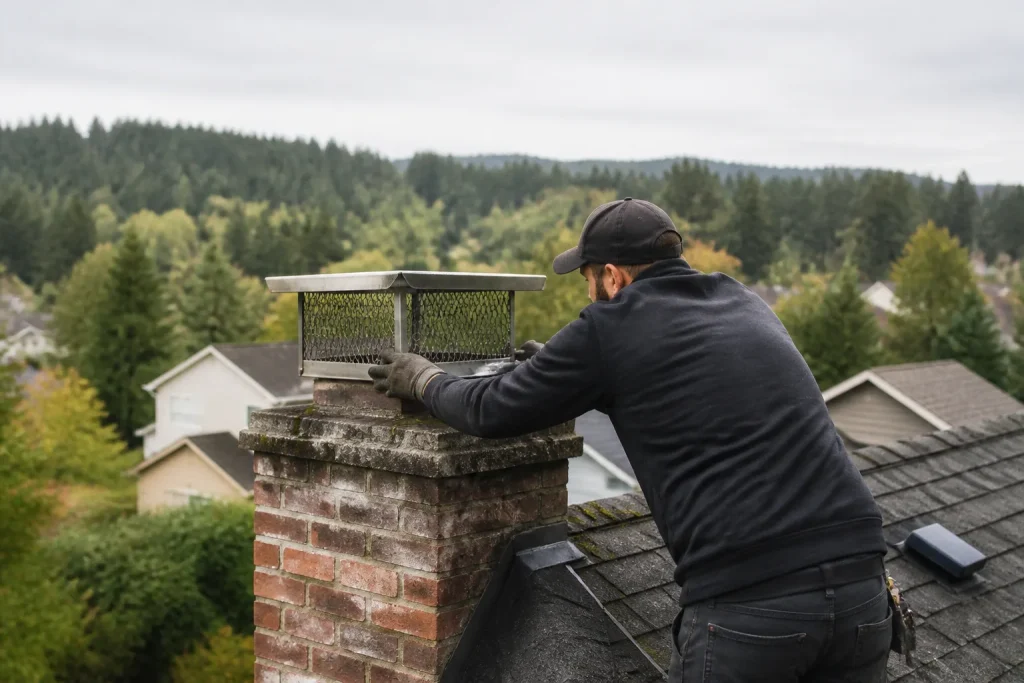
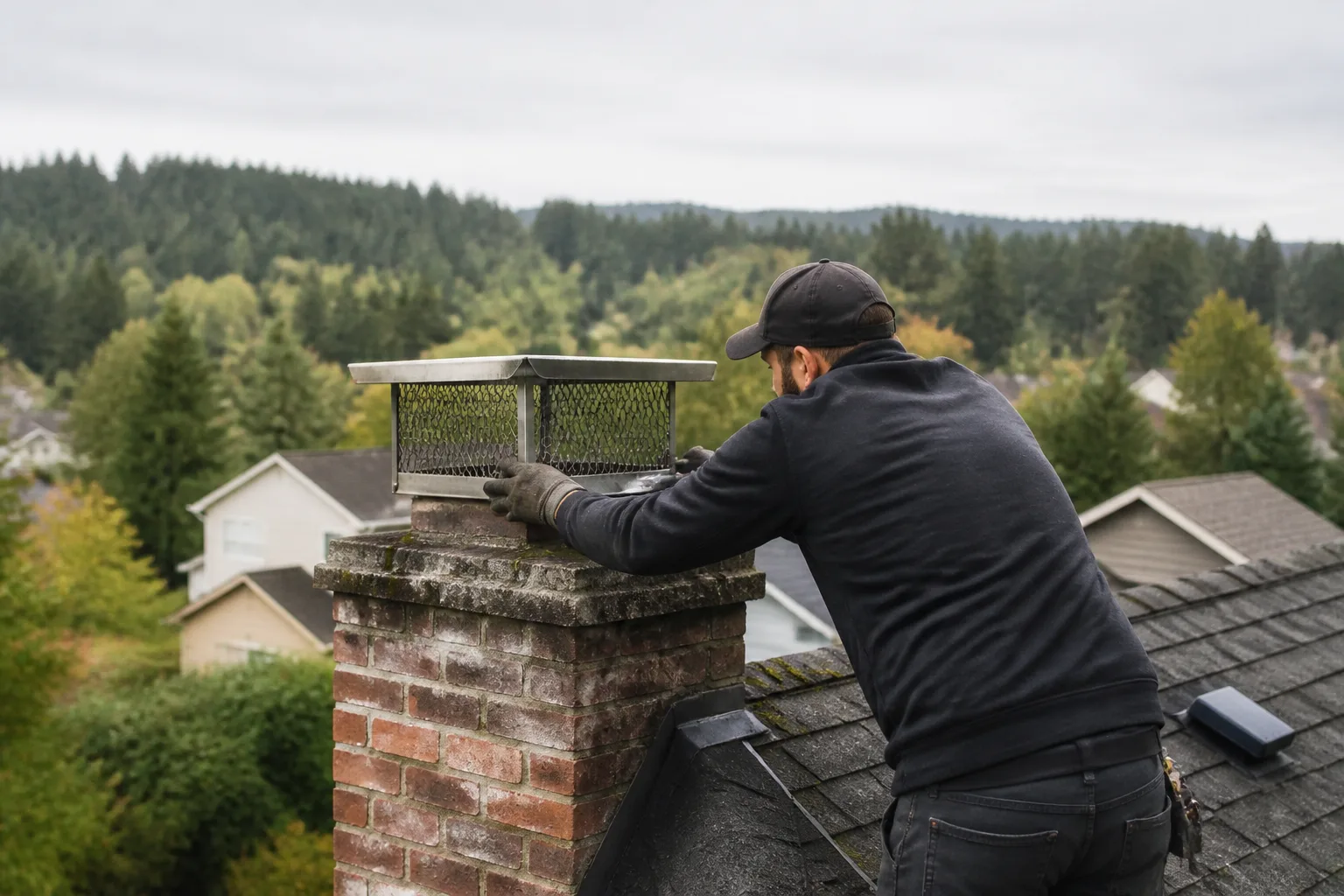
If you take the cap and crown seriously, most other components last longer. That’s not a sales pitch, it’s the order of failure we see in South Hill. Chimney cap and crown work protects the top of the system, and the top is where water damage starts.
What caused the failure matters more than what it looks like
A cracked liner from age and a cracked liner from a chimney fire can look similar on the surface. The repair path isn’t the same. Knowing the cause changes the decision.
A liner that’s cracked from gradual wear usually has a uniform pattern of deterioration. The flue interior builds up creosote, the heat cycles over many seasons, and the clay eventually cracks. That’s a condition that a liner restoration or a new stainless system can solve.
A liner cracked by a chimney fire often shows spalling, glazed creosote, or localized damage in one section, because the fire burned hottest in one spot. If that happened, the repair needs to address the heat damage and confirm the surrounding structure is sound before anything goes back in. Patching the crack without accounting for the fire is how homeowners end up back at the same conversation a few winters later.
Water damage looks different again. You’ll often see efflorescence (white staining) on the masonry, rust on the damper or firebox components, or a liner that’s breaking down from freeze-thaw cycles. In South Hill, where winters bring repeated wet and cold cycles, water intrusion is the leading cause of long-term structural damage to a masonry chimney.
The point: before anyone quotes a repair, someone should be able to tell you what caused the failure. If that question doesn’t come up, ask it.
When a stainless steel liner is the right call
A stainless steel liner replacement is the right call when the existing flue can’t be restored to safe working condition. That usually means the clay tile is cracked through, the flue is oversized or unlined for the appliance, or the interior has deteriorated to the point where patching won’t hold. When that’s the case, a flexible stainless liner is a code-compliant solution that doesn’t require tearing down the masonry.
We use DuraFlex flexible liner systems for this work because flexible liners let us reline older or damaged flues from the top, without full demolition. It’s the professional standard for this job, not the cheapest option.
A few honest notes on what to expect:
- It’s a real upgrade, not a patch. A properly installed stainless liner gives you a continuous, sealed flue that improves draft and keeps the appliance venting the way it should.
- It’s a decision worth getting right the first time. Chimney work done right the first time saves the cost of doing it twice, and this is one of those jobs where redoing it is expensive.
- It should last. Under normal use for a wood-burning appliance in South Hill conditions, a quality stainless liner should serve you for many years. How long depends on the fuel you burn, how often the chimney is swept, and how well the top of the system is protected from water.
- Not every chimney needs one. If the existing flue can be restored with a resurfacing product like HeatShield, that’s often the right path. HeatShield is a specialized repair process for deteriorating flue interiors, and it’s not something every sweep-only company offers. We’d rather restore what’s there than replace it if restoration is genuinely viable.
How to read a Level 2 inspection report
A Level 2 inspection report is a decision-making tool, not just a to-do list. The problem is most reports don’t tell you how to read them, so homeowners either approve everything on the page or ignore it entirely. Neither is a good outcome.
When you’re looking at a report, sort the findings into three buckets:
- Safety items. Anything that affects safe operation goes first. A blocked flue, a damaged liner, or a compromised firebox belongs here.
- Structural items that will get worse. A cracked crown or missing cap falls here. These aren’t urgent today, but they get more expensive the longer water gets in.
- Watch-list items. Things that are within tolerance now but should be rechecked next time. Good reports flag these separately so you’re not paying for work you don’t need yet.
A report should tell you what was found, what it means, and what’s actually necessary now versus what can wait. If a report is a long list without that context, ask for it. We’ll always tell you exactly what we found and what it means before we quote a single repair, and we’ll say plainly when work can safely wait.
The financial calculus, honestly
At some point, the cumulative cost of repairs can approach the cost of replacement. That’s a real threshold, and it’s worth thinking through instead of ignoring.
The way to frame it: add up what you’ve spent on repairs over the last several years and what you’re being quoted now. If the total keeps climbing on the same component, replacement becomes the better long-term decision. If the repairs are spread across different components, or the current repair fixes a root cause (like the crown) that protects the rest of the system, repairing is usually the better value.
Then factor in your heating system. If your insert or appliance has plenty of life left, a repair that keeps it venting correctly makes sense. If you’re planning to replace the appliance in the next few years, talk through how that decision interacts with the flue, so you’re not paying for a fix you’ll undo. This is where working with a company that handles the full system, from the firebox to the crown, saves you from a referral runaround between the appliance installer and the chimney company.
One more thing we tell South Hill homeowners: nothing is recommended without evidence you can see for yourself. If someone tells you the liner is failing and there’s no camera inspection and photo report to back it up, that’s not a diagnosis. It’s a quote.
When to call a pro
Some checks are reasonable for a homeowner: looking at the crown from the ground, confirming the cap is in place, noticing staining on the exterior. The work itself is a different matter. A chimney is a confined space, the flue interior is where the failure usually is, and the tall parts of the system aren’t safe to reach without proper equipment. A proper inspection needs a camera to see inside the flue, and that’s the only way to know whether a crack is surface-level or structural.
If you’ve spotted a problem, or it’s just been a while since the last inspection, this is the point to bring someone in. Start with a chimney sweep and a camera inspection, and get the findings explained before anything is booked.
Related services in South Hill: If the inspection turns up damage in the firebox itself, we handle fireplace repair. For crown, cap, flashing, liner, and structural work, look at our chimney repair services. And for the full picture of who we are, see South Hill Chimney Sweep.
The Bottom Line
Repair or replace isn’t decided by the age of the chimney. It’s decided by which component failed, what caused it, and whether the repair fixes the cause. Most South Hill chimneys land on the repair side when the failure is isolated and the cause is addressed. Replacement makes sense when the damage is systemic, when the same component keeps failing, or when replacement is genuinely the lower-cost path over the life of the system.
If you’re in South Hill and need help, South Hill Chimney Sweep offers free estimates. Call (833) 509-5329. We answer 24/7. Fast dispatch from 7am to 7pm, Sunday through Friday. Our technicians have up to 15 years of experience, and we’ll show you what we found before we quote anything.
Frequently Asked Questions
You know by getting a camera inspection of the flue and a full look at the crown, cap, firebox, and flashing, then matching the findings to what caused the problem. A cracked crown is almost always a repair. A flue interior that’s deteriorated beyond restoration is usually a stainless liner replacement. The decision comes from what the inspection shows, not from the age of the chimney. Call (833) 509-5329 for a free estimate.
It depends on the crack. If the damage is limited and the surrounding flue is sound, a restoration product like HeatShield may solve it. If the liner is cracked through, spalling, or too far gone to hold a repair, a new flexible stainless liner is the right call. Either way, the cause matters: a crack from age and a crack from a chimney fire need different repair paths. Call (833) 509-5329 for an exact quote, estimates are free.
The general rule for a wood-burning chimney is to sweep when there’s a measurable buildup of creosote, which for many households means once a year with regular use. If you burn often or burn green wood, check more frequently. A sweep is also the right time to have the chimney inspected, since that’s when problems are caught early. Call (833) 509-5329 to book a sweep and inspection.
The most common outcome is that a small problem, like a cracked crown or a missing cap, turns into a bigger one as water gets in season after season. The rarer and more serious outcome is that a liner problem or creosote buildup goes unnoticed and creates a fire or venting hazard. Ignoring the chimney doesn’t make it safer, it just delays the conversation. Call (833) 509-5329 for a free estimate and we’ll tell you what we find.
Written by the team at South Hill Chimney Sweep.
Need Chimney Cleaning Help?
Call South Hill Chimney Sweep - the local pro we connect you with is licensed and insured, with free written estimates in South Hill.
(833) 509-5329